
Batch Cooking on a Budget: Making One Afternoon Feed Your Family All Week

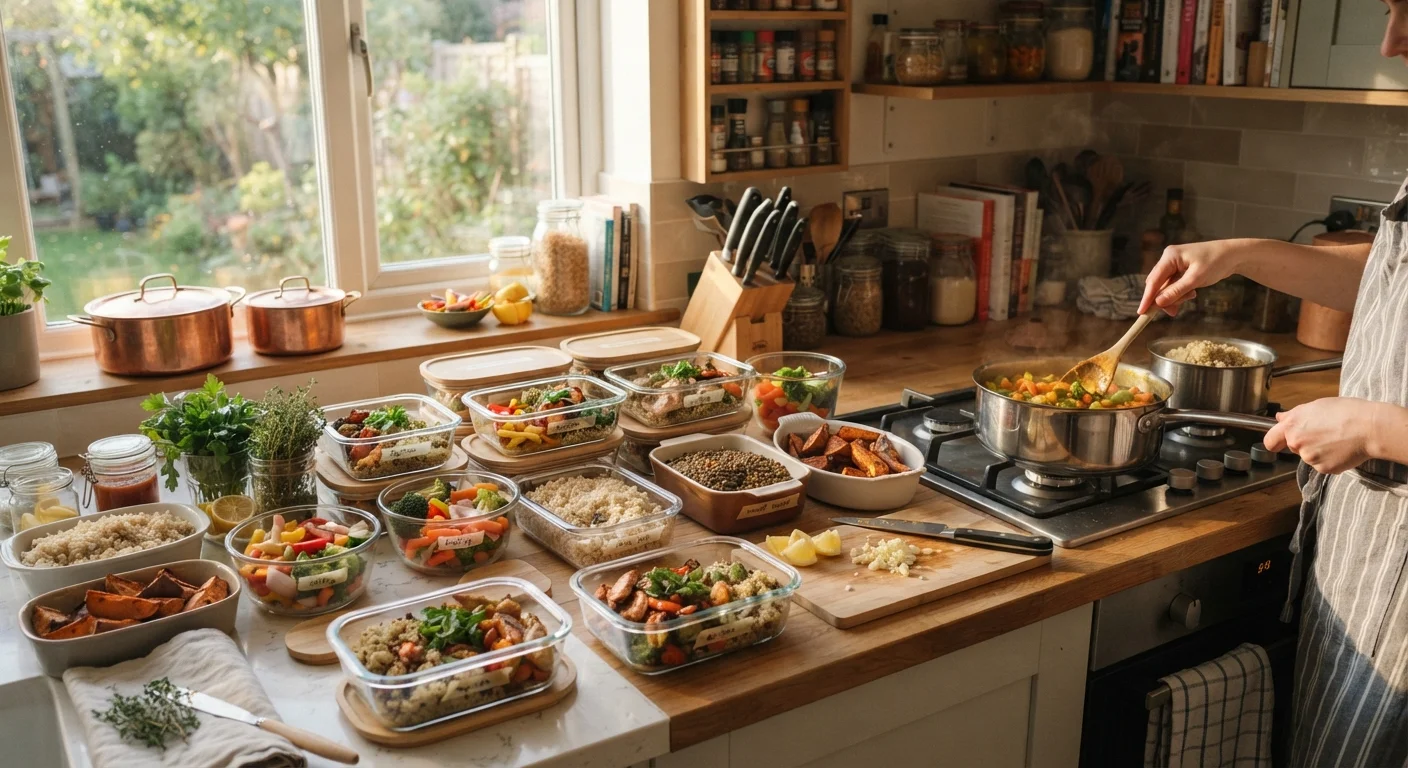
Photo: nativeinfoline.com editorial
Key Takeaways
- Cooking proteins, grains, and vegetables in large batches cuts per-serving food costs significantly compared to cooking individual meals.
- A single 3-to-4-hour session on a weekend afternoon is enough to prepare the components for a full week of family dinners.
- Building meals from five interchangeable components prevents flavor fatigue while keeping the shopping list short.
- Proper portioning and storage are the difference between food that feeds your family and food that gets thrown away.
Why batch cooking saves money (and time)
Cooking the same ingredient in bulk costs less per serving than cooking it fresh each night. A large pot of dried beans costs a fraction of the equivalent canned servings. A whole chicken roasted once provides meat for three or four different meals. When you buy larger quantities of fewer ingredients, you stay within a tighter budget and generate less food waste.
The time argument is equally concrete. Chopping onions for one meal takes nearly as long as chopping for five. Heating a pot of water is the same effort at every scale. Concentrating that labor into one block of time, rather than repeating it nightly, frees weeknights for everything that is not dinner prep.
For a deeper look at how to structure your spending before you even set foot in the store, see grocery budget strategies that hold up in real life.
Cook dried beans from scratch rather than buying canned. A one-pound bag of dried beans yields roughly the equivalent of four cans at a fraction of the cost, and the cooking liquid doubles as a flavorful broth.
Use a sheet pan with parchment for roasting vegetables so you can do two trays at once without adding cleanup time. More surface area means faster caramelization and better flavor.
Plan before you shop
A batch session without a plan produces a refrigerator full of random ingredients that nobody assembles into meals. Spend 20 minutes before the session mapping out which meals each component will anchor. A family-focused weekly meal plan gives the session structure and makes the shopping list precise.
Write the list by ingredient category: proteins, grains, produce, pantry staples. Cross-reference what is already in your pantry. The pantry staples that anchor cheap family meals are worth buying in quantity because they appear in nearly every batch plan: dried lentils, canned tomatoes, rice, oats, and oil.
If your family qualifies for USDA food assistance programs, the USDA Thrifty Food Plan framework provides a research-backed spending benchmark to build around.
What to cook: the five building blocks
The most useful batch sessions produce components rather than finished dishes. Components can be combined in different ways across the week, so the family does not eat the same meal twice.
- A large protein: One whole roasted chicken, a pot of cooked dried beans, or a sheet pan of baked eggs all provide protein across multiple meals.
- A whole grain: Brown rice, farro, or barley cooked in bulk forms the base for grain bowls, fried rice, soups, and side dishes.
- A roasted vegetable mix: Two or three seasonal vegetables roasted together can go into wraps, pasta, or grain bowls. Buying produce in season keeps this cost low. The seasonal produce calendar approach can cut this line item meaningfully.
- A sauce or broth: A simple tomato sauce or homemade vegetable broth made from scraps adds moisture and flavor to nearly any combination of the other components.
- A breakfast base: A large batch of oatmeal or a dozen hard-boiled eggs handles mornings without any additional cooking.
Running a single-afternoon session
Three to four hours is enough time for most families. The key is sequencing tasks so everything finishes close together without requiring constant attention.
- Start the longest-cooking items first: dried beans take 60 to 90 minutes, whole grains 30 to 45 minutes. Put them on before anything else.
- While those cook, prep vegetables for roasting: peel, chop, season, and get them into the oven.
- While the oven runs, prepare the protein. If it is a whole chicken, it can roast alongside the vegetables during the last hour.
- Make the sauce last, using the burner freed by the finished grains.
- Hard-boil eggs in the final 15 minutes.
If this is your first batch session, start with just three components rather than five. A grain, a protein, and a roasted vegetable provide enough variety for a full week of dinners with minimal complexity. The basics of meal prepping for beginners covers the fundamentals if the concept is new to your household.
Storage rules that protect your food and your budget
Food that spoils before it is eaten wastes both money and effort. The USDA recommends storing cooked foods in shallow containers and refrigerating them within two hours of cooking. Cooked grains and proteins keep for four days in the refrigerator. Roasted vegetables keep for three to five days. Sauces and broths keep for four to five days or can be frozen for several months.
Label every container with the date it was cooked. A piece of masking tape and a marker works. When Friday comes and a container has been in the fridge since Sunday, it needs to be used that day or frozen.
Invest in uniform, stackable containers. Mismatched storage makes it hard to see what is available and contributes to waste. A set of four to six containers in two sizes handles most batch sessions.
Turning building blocks into seven days of meals
The components cooked in one session can produce genuinely different meals across the week if you vary the format and seasoning.
| Day | Meal | Components used |
|---|---|---|
| Monday | Grain bowl with roasted vegetables | Brown rice, roasted vegetables, sauce |
| Tuesday | Chicken and rice soup | Chicken, brown rice, broth |
| Wednesday | Bean tacos | Beans, roasted vegetables |
| Thursday | Pasta with tomato sauce and chicken | Chicken, sauce (pasta cooked fresh) |
| Friday | Fried rice | Brown rice, eggs, roasted vegetables |
Breakfasts run on oatmeal and hard-boiled eggs all week. Lunches pull from the same components: a grain plus a protein packed into a container takes two minutes to assemble in the morning.
For families comparing this approach to other time-saving options, the real cost comparison between home cooking and meal kit services offers a useful reference point on where the money actually goes.
The content provided on our blog site traverses numerous categories, offering readers valuable and practical information. Readers can use the editorial team’s research and data to gain more insights into their topics of interest. However, they are requested not to treat the articles as conclusive. The website team cannot be held responsible for differences in data or inaccuracies found across other platforms. Please also note that the site might also miss out on various schemes and offers available that the readers may find more beneficial than the ones we cover.