
Envelope Budgeting vs. Digital Spending Trackers: Which Fits Your Family?

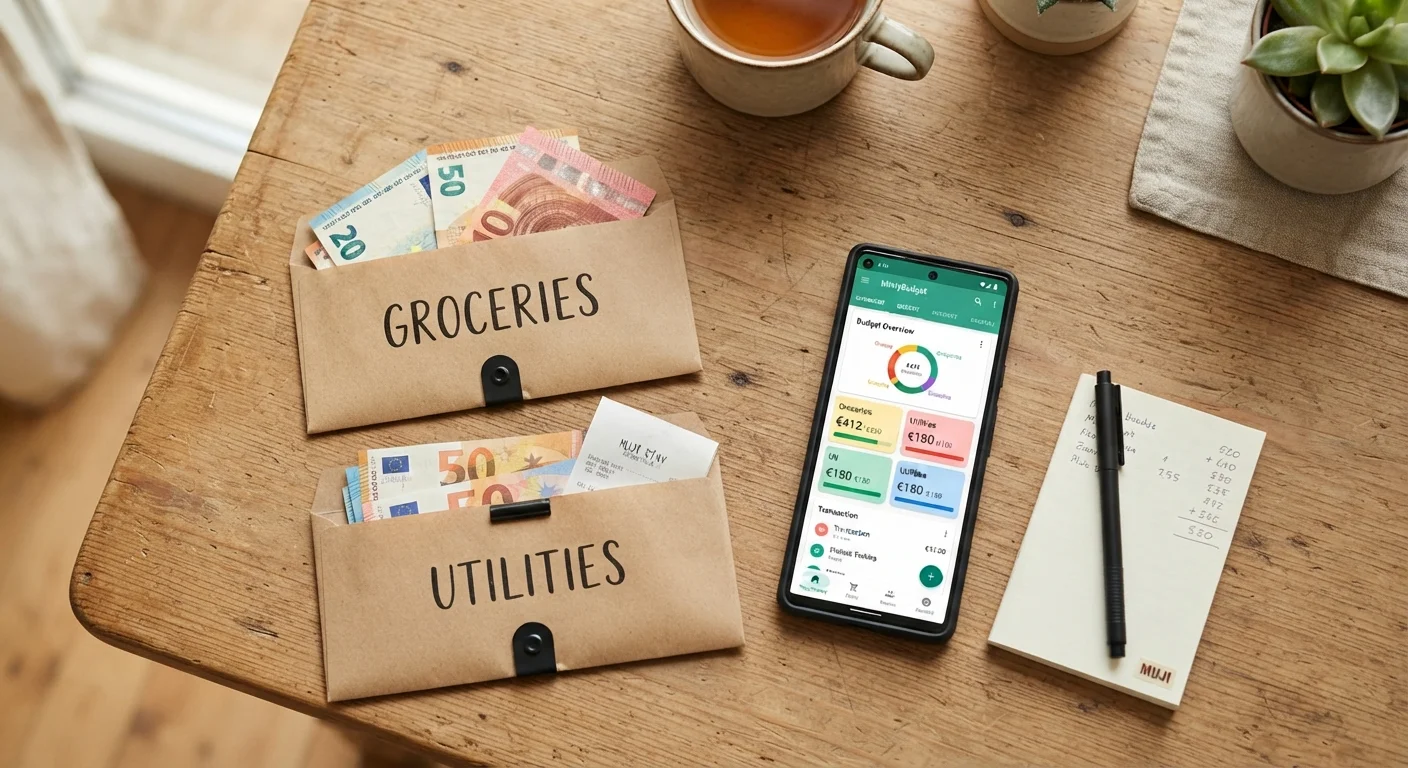
Photo: nativeinfoline.com editorial
Key Takeaways
- Envelope budgeting uses physical cash divided into labeled categories to create a hard spending limit.
- Digital trackers connect to bank accounts and categorize transactions automatically, but require consistent review.
- Neither method prevents overspending on its own; both require a household commitment to follow the system.
- Families with irregular income or heavy card use often find digital tools easier to maintain.
- Cash envelopes are most effective for variable categories like groceries, dining, and entertainment.
How each method works
Envelope budgeting, popularized by personal finance educators over decades, divides a household's take-home pay into physical envelopes labeled by spending category: groceries, gas, kids' activities, dining out. Once an envelope is empty, spending in that category stops until the next pay cycle. The system works entirely in cash, which means it applies most naturally to variable, day-to-day expenses rather than fixed bills like rent or utilities paid by check or auto-transfer.
Digital spending trackers are apps or software that connect to your bank accounts and credit cards via secure read-only links, then automatically sort transactions into categories. You set a budget for each category, and the app shows how much remains as you spend throughout the month. Some trackers send alerts when a category nears its limit. No cash changes hands; the system works within whatever payment method your family already uses.
For a plain explanation of the spending category vocabulary both systems rely on, see the family budget vocabulary guide.
Where envelope budgeting has an edge
The friction of handing over physical cash is, somewhat counterintuitively, the system's main strength. Consumer research from behavioral economists has consistently found that people spend less when paying with cash than with cards, because the pain of parting with physical money registers more immediately. For families that have tried tracking apps and still overspend, the envelope method removes the ability to rationalize one more card swipe.
The method also needs no technology, no login credentials, and no subscription fee. A stack of envelopes and a pen is the full startup cost. That simplicity makes it accessible for households that are building a budget for the first time and do not want to evaluate software before they have even categorized their expenses.
Its main limitation: the system is awkward for online purchases, recurring subscriptions, and any payment that cannot realistically be made in cash. Families that do most shopping online or rely heavily on credit card rewards will find the method hard to apply consistently.
| Criterion | Envelope budgeting | Digital spending trackers |
|---|---|---|
| Payment types covered | Cash purchases only | All linked accounts and cards |
| Setup cost | None (paper envelopes) | Free to paid subscription |
| Tech required | None | Smartphone or computer |
| Spending history | Manual records only | Automatic transaction log |
| Works for online shopping | No | Yes |
| Spending feedback speed | Immediate (empty envelope) | Near real-time alerts |
| Best for teaching kids | Yes, tangible and visible | Limited, screen-based only |
Where digital trackers pull ahead
The clearest advantage of digital trackers is coverage. A cash envelope system only tracks the money you withdraw. A digital tracker captures every transaction across every linked account, which means it can flag the quiet overspending categories that cash envelopes miss: streaming subscriptions, one-click online orders, and small recurring charges that accumulate without notice.
Digital trackers also generate spending history. After three months of use, most apps can show you exactly what your household spent on groceries, medical copays, or school supplies, which gives you real data to set realistic category budgets rather than relying on guesswork. That history is genuinely useful if your household wants to try a more structured approach, such as the zero-based budgeting method that assigns every dollar a purpose before the month begins.
The trade-off is setup time and ongoing attention. An app that goes unchecked for two weeks stops functioning as a budget and becomes a transaction log. The system only works if at least one adult reviews the dashboard regularly, ideally as part of a monthly budget reset.
Choosing the right fit for your household
The right method is whichever one your household will actually use for more than a month. A sophisticated app that sits ignored on a phone does less than a modest envelope system that two partners check every week.
A few practical questions can narrow the choice. Does your family pay for most things in cash or by card? Do both adults in the household engage with budgeting, or does one tend to opt out? Is overspending concentrated in a few variable categories, or spread across many types of purchases including online and subscription charges?
Some households combine both: cash envelopes for the two or three categories that historically cause the most overspending, and a digital tracker to monitor everything else. That hybrid approach adds a step, but it lets each tool do what it does well. If you are working out which overall budgeting framework to build either method into, the 50/30/20 rule analysis covers how percentage-based frameworks fit real family expenses.
This article is for general informational purposes only and does not constitute personalized financial advice. Consult a qualified financial professional for guidance specific to your household's situation.
The content provided on our blog site traverses numerous categories, offering readers valuable and practical information. Readers can use the editorial team’s research and data to gain more insights into their topics of interest. However, they are requested not to treat the articles as conclusive. The website team cannot be held responsible for differences in data or inaccuracies found across other platforms. Please also note that the site might also miss out on various schemes and offers available that the readers may find more beneficial than the ones we cover.