
Building a Family Meal Plan Around the USDA's Thrifty Food Plan

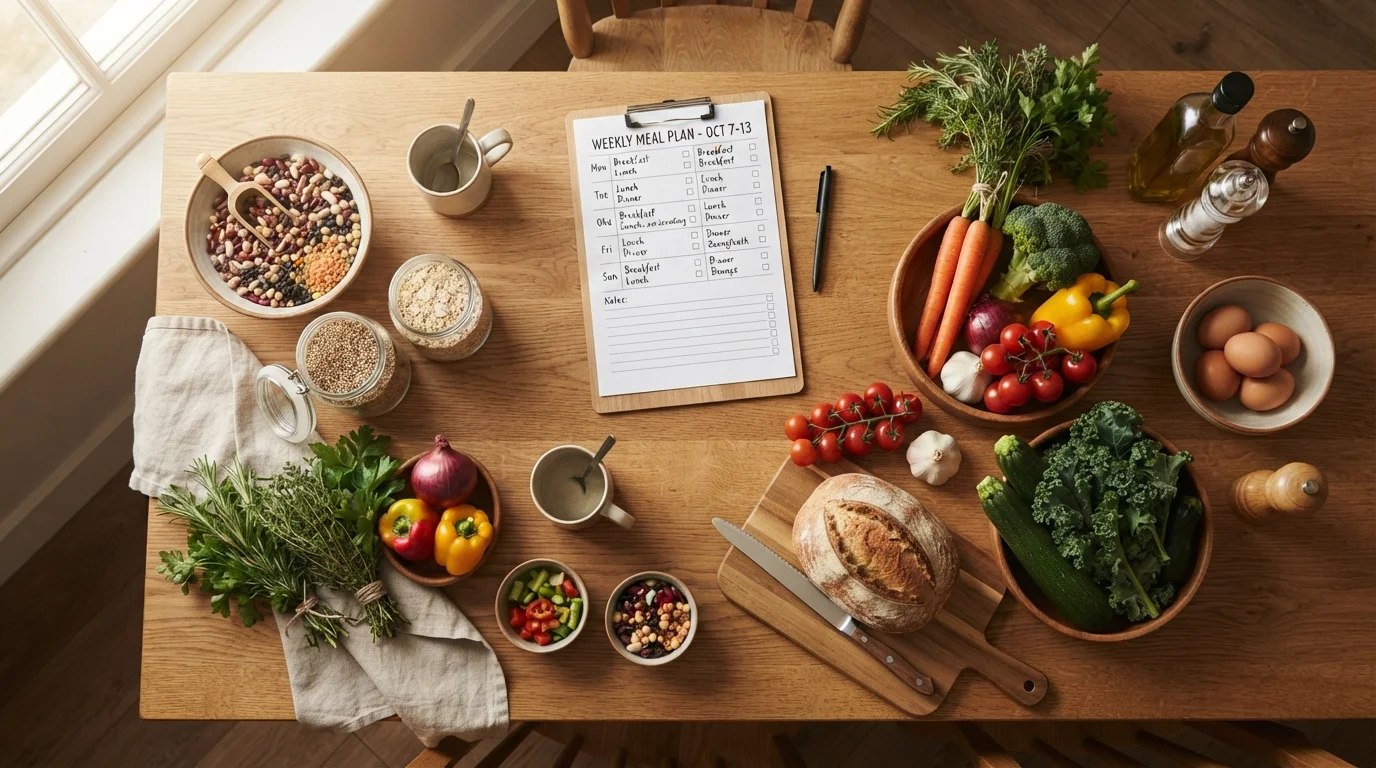
Photo: nativeinfoline.com editorial
Key Takeaways
- The USDA's Thrifty Food Plan sets a research-based weekly food budget benchmark for families at different sizes and compositions.
- The plan's food group targets can guide how you allocate grocery dollars across grains, proteins, vegetables, fruits, and dairy.
- Dry legumes, whole grains, and frozen produce are cost-efficient anchors that align with the plan's nutritional goals.
- Batch cooking and a written weekly plan reduce food waste and keep spending closer to the Thrifty Food Plan benchmark.
- The plan assumes home cooking; families who rely on convenience foods will find the benchmarks harder to meet.
What the Thrifty Food Plan actually is
The USDA's Thrifty Food Plan (TFP) is a model diet and corresponding weekly food budget developed to show the lowest cost at which a household can eat a nutritionally adequate diet. The USDA updates it periodically, most recently in 2021, when the plan was revised to better reflect current dietary guidelines and actual food costs. The TFP is also the basis for Supplemental Nutrition Assistance Program (SNAP) benefit calculations, so it has direct policy relevance for millions of American families.
The plan specifies target amounts from each food group per week: grains, vegetables, fruits, dairy, protein foods, and oils. It is built around home-prepared meals and uses national average grocery prices to set the budget figures. The USDA publishes monthly cost-of-food reports that show TFP amounts for households of different sizes and age compositions, which you can look up on the USDA Food and Nutrition Service website.
For a family of four with two school-age children, the TFP benchmark has historically been in the range of roughly $130 to $200 per week, though the exact figure shifts with food price inflation and household composition. Check the current monthly report for the most accurate number for your family's makeup. The point of the plan is not a strict spending cap but a research-based target that tells you what is nutritionally possible on a tight budget.
Families working on household budget planning will find the TFP a useful anchor when deciding how much of the monthly budget to allocate to groceries.
What you need before you start
Before mapping your family's meals to the TFP framework, pull together a few pieces of information and basic tools.
What you will need
Once you have these in hand, the planning process is straightforward. The weekly meal plan system described elsewhere on this site pairs well with the TFP structure.
How to build your plan step by step
The steps below walk through translating the TFP's food group targets into an actual week of meals. The goal is a written plan you can take to the grocery store.
Look up your household's TFP benchmark
Go to the USDA Food and Nutrition Service website and find the most recent monthly cost-of-food report. Locate the Thrifty Food Plan column and find the row matching your household composition: number of adults, number and ages of children. Write that weekly dollar figure down. This is your target, not a ceiling.
Map the TFP food group targets to your week
The TFP specifies weekly cup or ounce equivalents for each food group. For a reference 2,000-calorie adult diet, the plan targets roughly 6 ounce-equivalents of grains per day, 2.5 cups of vegetables, 2 cups of fruit, 3 cups of dairy, and 5.5 ounce-equivalents of protein foods. Scale these up or down for your household. Write the totals for the week and note which meals will cover each group.
Choose affordable anchors for each food group
Within each food group, select the lowest-cost options that your family will actually eat. Oats and brown rice anchor grains. Dry beans, lentils, eggs, and canned fish anchor proteins. Cabbage, carrots, onions, frozen spinach, and frozen peas anchor vegetables. Bananas and frozen berries anchor fruits. Plain fluid milk or plain yogurt anchors dairy. These items consistently cost less than processed alternatives and appear in most TFP-aligned meal patterns.
Write a seven-day meal map
For each day, write breakfast, lunch, dinner, and one or two snacks. Use the food group targets from Step 2 as a checklist: by the end of the week, each group should be met. Repeat simple breakfasts (oatmeal, eggs, whole-grain toast) to keep variety concentrated in dinners, where family preferences matter most. Lunches built from dinner leftovers reduce both cooking time and cost.
Build your grocery list from the meal map
Go through each day's meals and list every ingredient. Check it against your pantry inventory from the prerequisites and remove items you already have. Group the remaining items by store section: produce, dry goods, dairy, frozen, proteins. Estimate the cost of each item using recent store prices or the store's app. Total the estimate and compare it to your TFP benchmark.
Shop and track actual spending
Shop with the list and keep the receipt. After shopping, compare what you spent to the TFP benchmark and note which categories ran over. Over two to three weeks, these patterns reveal where your family's actual food preferences diverge most from the TFP assumptions, which is useful information for adjusting the plan going forward.
For families new to cooking in batches, the meal prepping starting point guide covers storage, equipment, and timing in more detail.
Common gaps and how to close them
Most families overspend in two areas relative to TFP benchmarks: protein foods and snack or convenience items. The plan allocates a significant share of protein calories to dry beans, lentils, and peas rather than meat, because legumes cost far less per gram of protein. Shifting even two dinners per week from ground beef to a bean-based dish can pull weekly spending back toward the benchmark. See the guide to legumes as family protein for practical ways to make that swap.
Convenience foods, including pre-cut vegetables, single-serve snack packs, and boxed meal kits, are priced well above what the TFP assumes. Replacing them with whole vegetables, bulk dry goods, and home-portioned snacks is where most families recover the most budget without changing what they eat in any meaningful way.
Frozen vegetables and fruits are nutritionally comparable to fresh, according to USDA research, and frequently cheaper. Building a strong pantry of shelf-stable staples alongside a well-stocked freezer is the structural change that makes the TFP targets achievable week after week.
Spending one afternoon on batch cooking prepares most of the week's food at once and reduces the temptation to buy takeout on busy evenings, which is one of the fastest ways to exceed any food budget. For broader grocery spending habits, the grocery budget strategies article covers unit pricing and store-brand substitutions in detail.
This article provides general nutrition and budgeting information. It is not medical or financial advice. Consult a registered dietitian or qualified financial professional for guidance tailored to your household's specific health conditions or financial situation.
The content provided on our blog site traverses numerous categories, offering readers valuable and practical information. Readers can use the editorial team’s research and data to gain more insights into their topics of interest. However, they are requested not to treat the articles as conclusive. The website team cannot be held responsible for differences in data or inaccuracies found across other platforms. Please also note that the site might also miss out on various schemes and offers available that the readers may find more beneficial than the ones we cover.