
The Weekly Meal Plan: A Family-Focused System That Actually Works

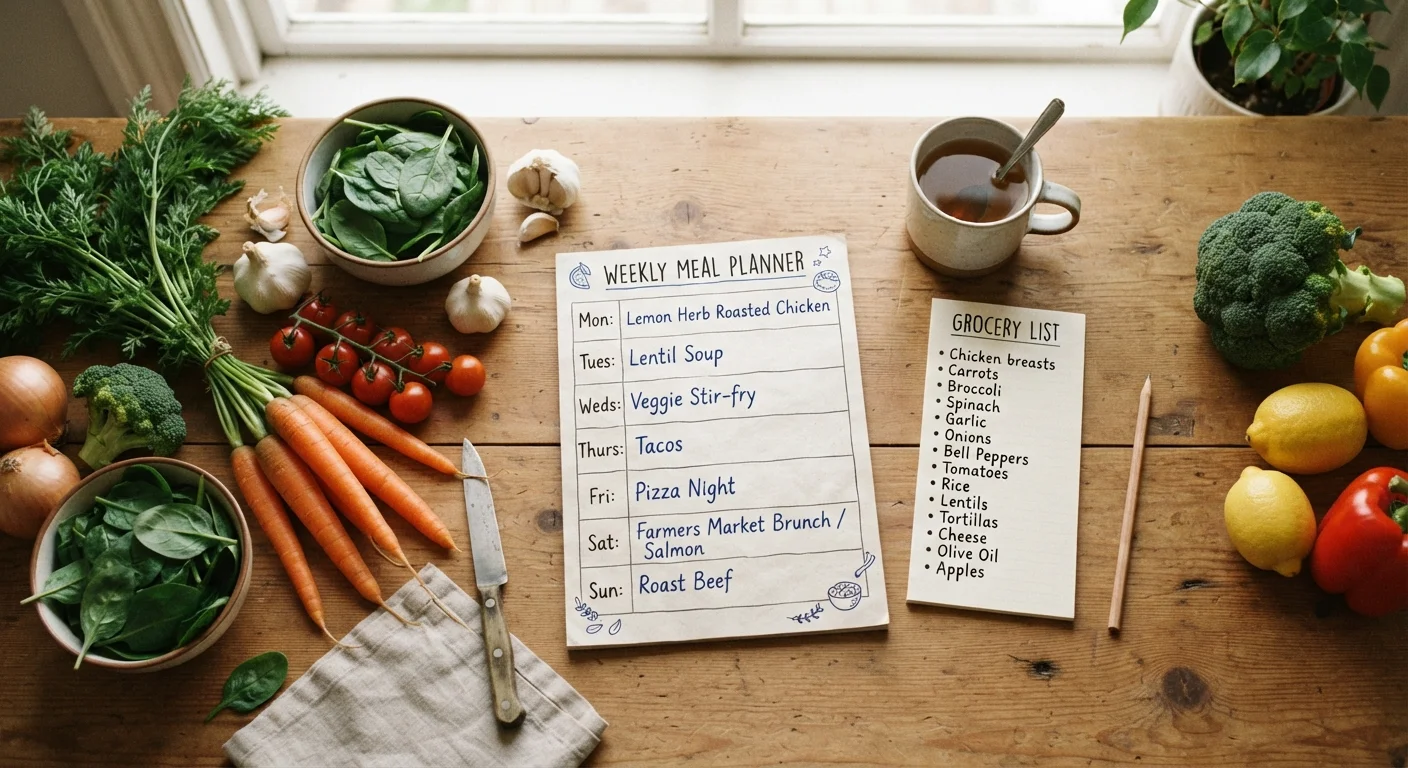
Photo: nativeinfoline.com editorial
Key Takeaways
- Meal planning once a week reduces impulse purchases and cuts food waste by keeping your grocery list intentional.
- Checking your pantry and fridge before planning prevents buying duplicates and builds meals around what you already own.
- Assigning specific meals to specific nights reduces daily decision fatigue and speeds up weeknight cooking.
- Batch-cooking one or two proteins or grains each week multiplies meals without multiplying prep time.
- A repeating weekly template, adjusted for sales and seasons, is faster to build and easier to stick with.
Why most meal plans fail before Wednesday
Most families try meal planning at least once. The plan looks solid on Sunday, but by Tuesday a soccer practice, a forgotten defrost, or a child who suddenly hates the planned dinner derails the whole week. The problem usually is not motivation. It is that the plan was built without buffers and without input from the people who have to eat it.
A workable family meal plan is not a rigid schedule. It is a decision made in advance so you are not making it at 5:45 p.m. while hungry. The goal is to answer the question "what are we eating?" before the week starts, which cuts grocery spending by reducing unplanned store runs and takeout. According to USDA data on household food expenditures, unplanned food purchases are among the largest drivers of budget overruns for families with children.
For a framework tied to federal cost benchmarks, see how the USDA Thrifty Food Plan structures nutritious, low-cost weekly meals.
What you need before you start
Setting up your plan takes less time when the right tools are ready. The list below is short on purpose.
Weekly planner template (paper or digital)
Provides a fixed grid for assigning meals to each day so nothing gets left unplanned.
Pantry and fridge inventory list
Tracks what food is already on hand before writing a grocery list, preventing duplicate purchases.
Grocery list organized by store section
Reduces time spent in the store and minimizes off-list impulse purchases.
Household calendar or schedule
Lets you match meal complexity to available cooking time on each specific evening.
Food storage containers (varied sizes)
Enables safe storage of prepped ingredients and leftovers intended for later meals in the week.
If you want to cut prep time further after the plan is built, the batch cooking guide covers how to turn one afternoon into a full week of meals.
Building the plan step by step
Each step below feeds directly into the next. Work through them in order the first time. After two or three weeks, the whole process typically takes under 30 minutes.
Audit the fridge, freezer, and pantry
Before writing a single meal idea, open every door and take stock. Note proteins already on hand, vegetables that need to be used in the next few days, and staples like canned beans, pasta, or rice. Meals built around what you already own cost less and cut spoilage.
Map your week's actual schedule
Look at the calendar before assigning meals. A night with two overlapping activities is not the right night for a recipe that takes 45 minutes of active cooking. Slot slow cooker or sheet-pan meals on busy nights and save longer recipes for evenings with room to cook. Label at least one night as a "leftovers" or "clean-out-the-fridge" night to absorb anything that did not get eaten earlier.
Choose five to six dinners, then work backward
Five to six dinners cover most families without over-buying. For each dinner, identify which lunch and breakfast it can support with leftovers or shared ingredients. A roast chicken on Monday becomes chicken tacos on Wednesday and chicken broth for a Friday soup. This ingredient overlap is where real savings happen.
Write the grocery list by store section
Translate your meal plan into a single grocery list organized by store section: produce, dairy, meat, dry goods. A list structured this way cuts time in the store and reduces the chance of picking up items you do not need. Cross-reference with your pantry audit from step one to avoid buying duplicates.
Set a prep window before the week begins
Identify a 30-to-60-minute block, usually the evening before a busy week starts, to handle basic prep: washing vegetables, cooking a base grain, marinating a protein, or portioning snacks. This is not full batch cooking. It is removing the friction points that cause plans to collapse mid-week. For a deeper approach to bulk prep, the meal prepping guide covers storage, nutrition, and time-saving methods in detail.
Once your plan is running, a weekly grocery audit checklist can help you spot where food still ends up wasted and tighten the loop.
Keeping the system running week after week
The first week is the hardest because you are building the template from scratch. By week three, you are adjusting an existing framework rather than creating one, which cuts planning time significantly.
A few habits that help the system hold up over time:
- Keep a running "meal idea" list on your phone so you can add dishes as they occur to you mid-week, rather than drawing a blank on planning day.
- Rate each meal informally. If two adults and three kids finish a dish with no complaints, it earns a spot in the rotation. Meals that get pushed aside twice get retired.
- Adjust for store sales weekly, but only swap in a sale item if it fits a meal slot you already have. Buying discounted food with no plan for it is how waste happens.
For the broader budget picture, grocery budget strategies covers how unit pricing and store-brand swaps complement the planning work you are already doing. If you are thinking about where food fits within your overall household spending, the 50/30/20 budgeting framework is worth examining, with a realistic look at where it holds and where it breaks down for families.
The content provided on our blog site traverses numerous categories, offering readers valuable and practical information. Readers can use the editorial team’s research and data to gain more insights into their topics of interest. However, they are requested not to treat the articles as conclusive. The website team cannot be held responsible for differences in data or inaccuracies found across other platforms. Please also note that the site might also miss out on various schemes and offers available that the readers may find more beneficial than the ones we cover.