
Legumes as the Frugal Family's Protein: What They Are and How to Use Them

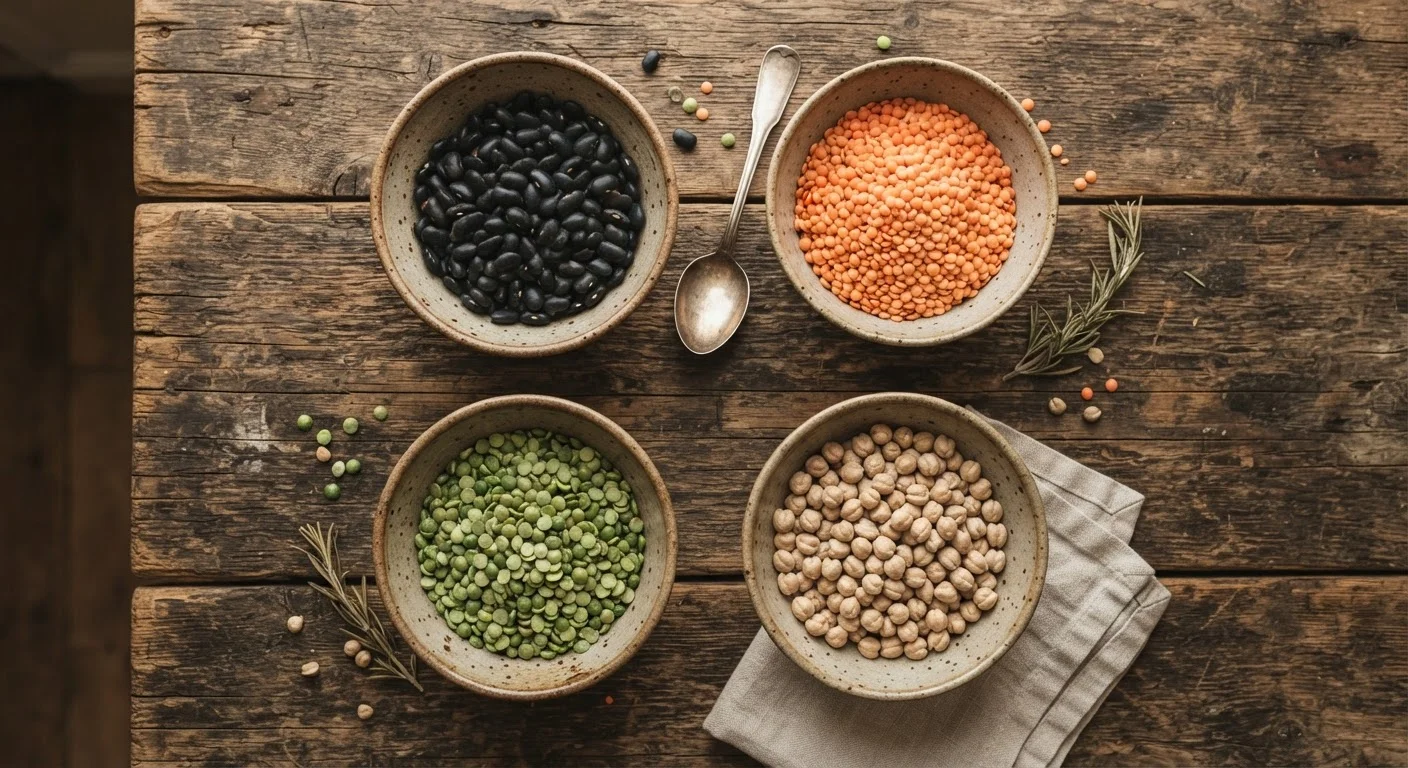
Photo: nativeinfoline.com editorial
Key Takeaways
- Dried beans and lentils typically cost under $2 per pound and provide multiple servings.
- Legumes supply protein, iron, folate, and fiber, making them nutritionally competitive with animal proteins.
- Canned legumes trade some cost savings for convenience and are still significantly cheaper than meat.
- Combining legumes with grains across a day's meals covers all essential amino acids.
- The USDA's Thrifty Food Plan uses legumes as a core protein source for low-cost nutritious eating.
What counts as a legume
The legume family is large. It includes dried beans (black, pinto, kidney, navy, cannellini), lentils (red, green, brown, French), chickpeas, split peas, black-eyed peas, and edamame. Peanuts are also legumes, though most people cook with them differently. What these foods share is a high concentration of protein and starch inside a seed, packaged without refrigeration and priced well below most animal proteins.
When a recipe calls for pulses, it is using a narrower term that refers specifically to dried legume seeds, not fresh peas or green beans. The distinction matters mainly for nutrition labels and cooking times. For grocery budgeting, dried pulses and canned legumes cover the same practical ground.
The pantry staples guide covers dried beans and lentils as foundational shelf-stable ingredients alongside rice, oats, and canned tomatoes.
Nutrition you actually get for the money
A one-pound bag of dried black beans, which costs roughly $1.50 at most grocery stores, yields about six cups of cooked beans. Each half-cup serving provides approximately 7 to 8 grams of protein, 7 to 8 grams of fiber, and meaningful amounts of iron, folate, magnesium, and potassium. Per gram of protein, that works out to a few cents compared to several dollars for chicken breast or ground beef.
Fiber is the nutrient most American families consistently under-consume. Legumes address that gap at the same time they address protein. A diet that relies partly on beans and lentils for protein tends to have higher fiber intake than one centered on meat, without any separate effort or added cost.
$0.15
Approximate cost per serving of dried lentils
Based on typical retail prices for a one-pound bag of dried lentils yielding approximately 10 half-cup cooked servings.
7-9g
Protein per half-cup cooked beans
USDA FoodData Central lists protein content for cooked beans across common varieties in this range per half-cup serving.
15g+
Fiber per cup of cooked lentils
USDA data shows one cup of cooked lentils provides approximately 15 grams of dietary fiber, more than half the daily recommended intake for adults.
One practical concern is amino acid completeness. Legumes are low in methionine, an essential amino acid found in grains, eggs, and meat. Eating rice or corn bread alongside beans on the same day covers the gap. The body does not require both in the same meal, a point that nutrition research clarifies when addressing common myths about plant protein.
Dried versus canned: the real cost comparison
Dried legumes cost less per serving than canned, but canned legumes still represent strong value compared to meat. A 15-ounce can of chickpeas provides about 1.5 cups of cooked chickpeas, usually for under $1.50. That same amount made from dried chickpeas costs closer to $0.40, but requires an overnight soak and 60 to 90 minutes of cooking. Neither choice is wrong; the trade-off is time versus money.
Households that batch-cook on weekends often find dried beans more economical. Households with less cooking time on weeknights rely on canned beans without sacrificing much nutrition. Rinsing canned beans before use reduces their sodium content by around 40 percent, per USDA data, which makes them a practical option for families watching sodium intake.
Red lentils require no soaking at all and cook in under 25 minutes. They dissolve into soups and sauces, which makes them a hidden protein booster in dishes where visible beans might meet resistance from picky eaters.
Simple ways to build legumes into family meals
The most common obstacle is not cost or nutrition; it is unfamiliarity. Families that did not grow up eating beans regularly tend to reach for them only in chili or soup. Those are reliable starting points, but legumes work across a wider range of formats.
- Stir cooked lentils into pasta sauce or meat-based dishes to stretch the meat further and lower the cost per serving.
- Mash chickpeas with olive oil, lemon juice, and garlic as a sandwich spread or vegetable dip.
- Swap half the ground meat in tacos or burgers with black beans or pinto beans.
- Cook red lentils directly into tomato soup for a thicker texture and added protein.
- Use white beans in a slow-cooker stew with whatever vegetables need to be used up.
The USDA's Thrifty Food Plan framework allocates a notable share of the protein budget to legumes precisely because they deliver consistent nutritional return at low cost. Families who work legumes into two or three dinners per week typically see measurable reductions in their weekly grocery spend without reducing the protein content of their diet.
For a broader look at how budget eating intersects with nutritional quality, the article on frugal food myths addresses the evidence directly.
Frequently Asked Questions
The content provided on our blog site traverses numerous categories, offering readers valuable and practical information. Readers can use the editorial team’s research and data to gain more insights into their topics of interest. However, they are requested not to treat the articles as conclusive. The website team cannot be held responsible for differences in data or inaccuracies found across other platforms. Please also note that the site might also miss out on various schemes and offers available that the readers may find more beneficial than the ones we cover.