
Eating Cheaply Is Not the Same as Eating Poorly: Separating Frugal Food Myths from Facts

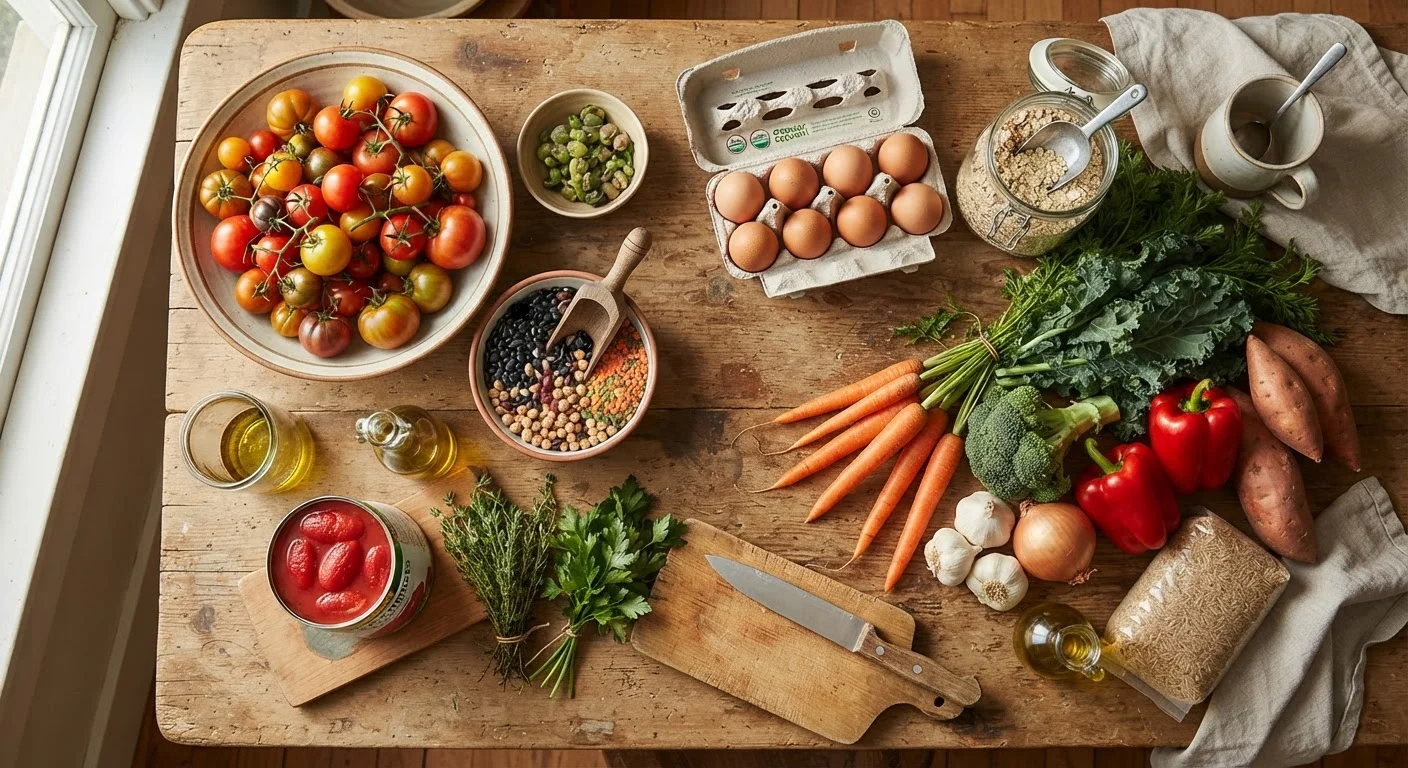
Photo: nativeinfoline.com editorial
Key Takeaways
- Budget staples like beans, eggs, and oats deliver strong nutritional value at low cost per serving.
- Frozen and canned produce are nutritionally comparable to fresh and often cost significantly less.
- Cooking from scratch takes more time on some nights, but batch cooking reduces that burden considerably.
- The belief that cheap food is automatically unhealthy drives unnecessary spending on premium products.
- Unit pricing and seasonal produce planning are two of the most effective tools for lowering grocery bills.
Where the myths come from
Beliefs about budget food tend to form at the intersection of real experience and marketing pressure. Families who have watched grocery store discount sections fill up with ultra-processed snacks reasonably conclude that cheap equals bad. At the same time, premium food brands spend heavily to associate price with health. The result is a widespread assumption that has real financial consequences: families overspend on products they believe are necessary when lower-cost alternatives provide comparable nutrition.
Why healthy food feels expensive examines the mechanics of this perception in detail. The short version: the assumption is often wrong, and the myths below show exactly where it breaks down.
Myth
Cheap food is junk food. If you are spending less, you are eating worse.
Fact
Some of the most nutrient-dense foods in the American diet, including dried lentils, eggs, oats, canned beans, and frozen spinach, are also among the lowest in cost per serving.
The conflation of price with quality is understandable given how heavily processed snacks dominate discount-store shelves. However, whole foods that have been affordable for generations, such as dried legumes, eggs, and whole grains, consistently rank well on nutrient density measures. The USDA's food cost data shows that dried beans provide protein and fiber at a fraction of the per-gram cost of most packaged protein products.
See how legumes work as affordable protein sources for a practical breakdown of cooking and nutrition basics.
Myth
Fresh produce is always nutritionally superior to frozen or canned.
Fact
Frozen vegetables are typically processed within hours of harvest, which preserves vitamins well. Canned vegetables, rinsed to reduce sodium, are nutritionally comparable to fresh for most nutrients.
Fresh produce can lose meaningful amounts of water-soluble vitamins like vitamin C and folate during the days between harvest and your table. Frozen produce bypasses most of that window. Research published in peer-reviewed food science journals has found frozen vegetables often match or exceed fresh in vitamin retention for common varieties like peas, corn, and broccoli.
Canned tomatoes, for example, contain higher concentrations of lycopene than raw tomatoes because heat processing breaks down cell walls. The practical takeaway: build meals around whatever form of a vegetable costs least that week. Seasonal produce calendars can help identify when fresh is genuinely the affordable option.
Myth
Cooking from scratch every night takes too long to be realistic for busy families.
Fact
Most budget-friendly meals take 30 minutes or less to prepare. Batch cooking on one or two days per week eliminates the daily time pressure almost entirely.
A pot of rice and beans, a sheet pan of roasted vegetables, or a large batch of lentil soup requires roughly 30 to 45 minutes of active time and produces enough for multiple meals. The time cost is real on those cooking days, but it is front-loaded, not daily.
The comparison that matters is not scratch cooking versus instant meals; it is weekly time investment across all meal preparation. Families that batch cook report spending less cumulative time in the kitchen than those who cook individually each night or rely on takeout decisions made under pressure.
Myth
Store brands are lower quality than name brands.
Fact
Store-brand and name-brand versions of staple products like oats, canned tomatoes, flour, and frozen vegetables are often produced by the same manufacturers and meet identical federal food safety standards.
Federal labeling and safety regulations apply equally to all packaged food regardless of brand. For commodity ingredients, the formulation difference between store and name brands is frequently nonexistent. Consumer Reports testing has repeatedly found store-brand staples equivalent in quality to name-brand counterparts at a lower price.
The price gap on staples like canned beans, pasta, and frozen vegetables typically runs 20 to 40 percent. Over a full month of grocery shopping, that gap compounds into a meaningful figure. Grocery budget strategies that work in practice cover exactly this kind of substitution in more detail.
Myth
You need expensive supplements to fill nutritional gaps when eating on a budget.
Fact
A varied diet built on affordable whole foods covers the nutritional needs of most healthy adults without supplementation.
Supplement marketing often targets the anxiety that budget eating creates nutritional deficiencies. For most healthy adults eating a range of foods, that anxiety is not well supported by evidence. Iron, calcium, B vitamins, and other commonly supplemented nutrients appear in eggs, dairy, legumes, leafy greens, and fortified staples like oatmeal.
There are real cases where supplementation is appropriate, such as vitamin D in low-sunlight regions, folate during pregnancy, or B12 for those avoiding animal products. Those decisions belong with a healthcare provider, not a supplement aisle. Families concerned about spending on products that may not be necessary can read more at overspending on supplements.
What this means for grocery planning
Correcting these myths does not automatically reduce a grocery bill. It removes the mental barrier that stops families from reaching for dried beans instead of a protein bar, or frozen broccoli instead of a fresh premium variety. That shift in shopping behavior, applied consistently, is where actual savings accumulate.
Nutrition does not require premium prices
Unit pricing, the cost per ounce or pound listed on shelf tags, is the most direct tool for comparing real value across formats and brands. Pairing that habit with a seasonal produce calendar means the lowest-cost fresh produce is also at peak flavor and availability.
Cutting costs too aggressively has real limits
Families looking to build a reliable low-cost pantry can start with staples nutritionists consistently recommend, which covers the specific ingredients that deliver the most nutritional return per dollar spent. For a broader look at what the evidence says about affordable nutrition, eating well on a tight budget is a useful companion read.
The content provided on our blog site traverses numerous categories, offering readers valuable and practical information. Readers can use the editorial team’s research and data to gain more insights into their topics of interest. However, they are requested not to treat the articles as conclusive. The website team cannot be held responsible for differences in data or inaccuracies found across other platforms. Please also note that the site might also miss out on various schemes and offers available that the readers may find more beneficial than the ones we cover.