
Fresh, Frozen, or Canned: Which Form of Produce Stretches Your Dollar Furthest

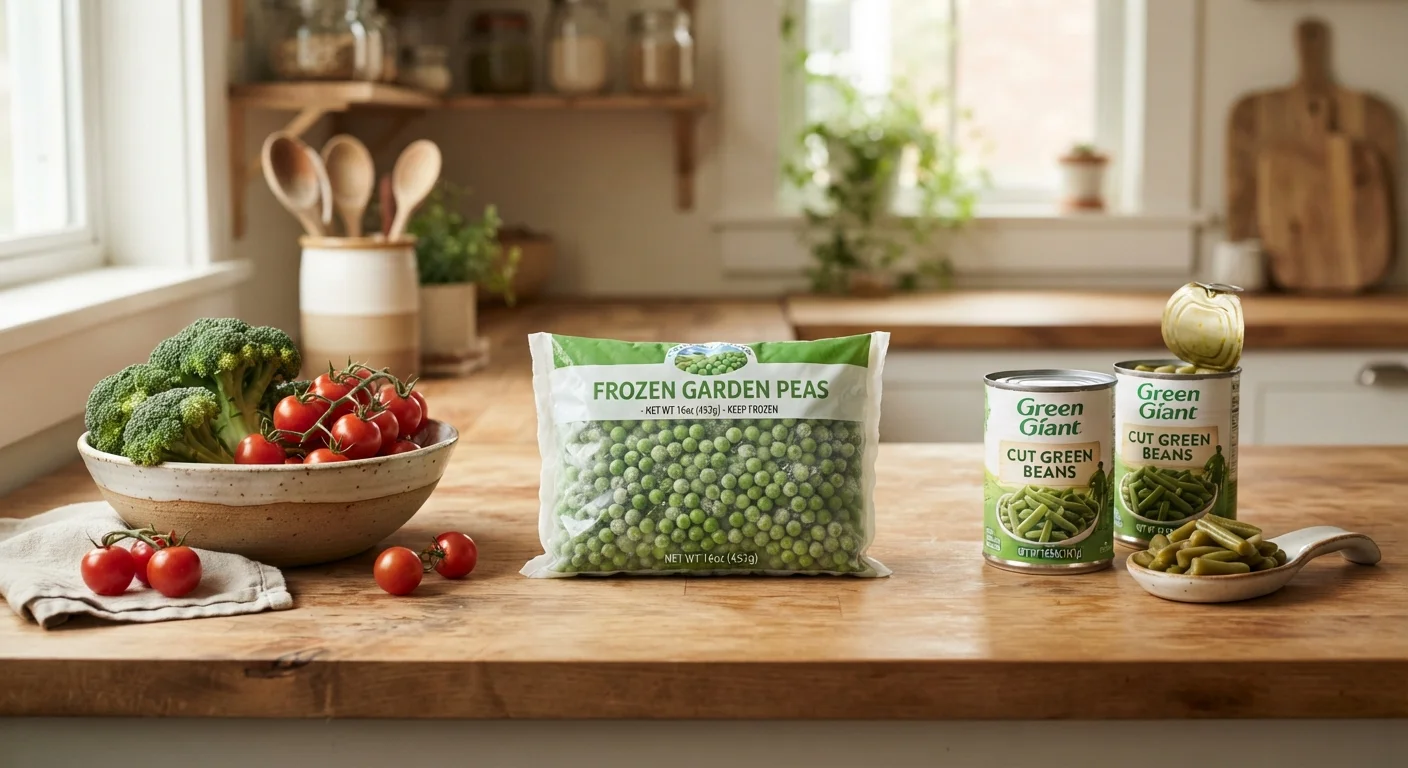
Photo: nativeinfoline.com editorial
Key Takeaways
- Frozen and canned produce are typically cheaper per serving than fresh, especially out of season.
- Frozen vegetables retain most nutrients because they are processed shortly after harvest.
- Canned produce can be high in sodium or added sugar; rinsing and label-reading help.
- Fresh produce wins on price only when bought in season and used before it spoils.
- A mix of all three forms usually delivers the best balance of cost, nutrition, and convenience.
What you actually pay per serving
Price comparisons between fresh, frozen, and canned produce are only meaningful when you calculate cost per edible serving, not cost per package. A one-pound bag of fresh spinach and a one-pound bag of frozen spinach may sit at similar shelf prices, but the fresh bag wilts to a fraction of its volume within days, while the frozen bag stays usable for months.
USDA Economic Research Service data on food prices shows that frozen vegetables generally cost less per cup of cooked product than their fresh counterparts when produce is out of season. Canned beans, tomatoes, and corn routinely come in under $1 per serving, making them among the lowest-cost sources of vegetables available in any American grocery store.
Fresh produce undercuts both options only during peak local season. A flat of in-season tomatoes or a summer zucchini from a farmers market can drop below canned prices per pound. For guidance on timing those purchases, the seasonal produce calendar approach is worth a look. Outside of those windows, fresh is usually the most expensive form, especially once spoilage waste is counted.
Nutrition across all three forms
The nutritional gap between fresh, frozen, and canned is smaller than many families expect, and the direction of the gap shifts depending on how fresh the fresh produce actually is.
Vegetables destined for freezing are typically harvested at peak ripeness and processed within hours. That timing preserves water-soluble vitamins such as vitamin C and folate reasonably well. A 2017 study published in the Journal of Food Composition and Analysis found that frozen vegetables were nutritionally comparable to fresh in most categories, and in some cases had higher nutrient levels than fresh produce that had spent several days in transit and retail storage.
Canned produce faces more nutrient loss during the heat-processing stage, particularly for heat-sensitive vitamins. However, minerals and fiber hold up well, and some nutrients actually increase: the lycopene in canned tomatoes is more bioavailable than in raw tomatoes because heat breaks down cell walls. The main nutritional concerns with canned goods are sodium in vegetables and added sugar in fruit. Choosing no-salt-added canned vegetables and fruit packed in juice rather than syrup resolves most of those concerns. See what nutrition-focused pantry staples to prioritize for more on label reading.
Fresh produce, bought in season and eaten within two to three days of purchase, can deliver peak nutrient density. The problem is that few families consistently hit that timing window.
| Fresh | Frozen | Canned | |
|---|---|---|---|
| Typical cost per serving | Higher, especially off-season | Low to moderate year-round | Lowest year-round |
| Nutrient retention | High if very fresh; drops quickly | High; processed at peak ripeness | Moderate; heat-sensitive vitamins lost |
| Shelf life | Days to one week | 8 to 12 months in freezer | 1 to several years |
| Prep time | Washing, chopping required | Minimal; ready to cook | None; open and use |
| Spoilage risk | High | Very low | Negligible |
| Sodium or sugar concerns | None | Usually none | Often high; check label |
Convenience and waste in a busy household
For families cooking on weeknights, convenience matters. Frozen vegetables need no washing, chopping, or peeling, and they go straight from freezer to pan. That reduces both prep time and the probability that produce sits forgotten until it goes bad.
Canned goods require even less handling. They are shelf-stable for one to several years, which means they absorb budget flexibility: buy when on sale, use when needed. For a deeper look at building that kind of pantry buffer, the pantry staples strategy covers the approach in detail.
Fresh produce demands more active management. It must be stored correctly, used within a short window, and replaced frequently. The USDA estimates that American households throw away between 30 and 40 percent of the food supply, and fresh produce is a major contributor to that loss. Spoilage waste directly increases the real cost per serving of fresh produce beyond what the shelf price suggests.
How to build a practical mix for your family
The most cost-effective strategy is not to pick one form and stick to it. Canned beans and tomatoes belong in most pantries as a baseline because they are cheap, shelf-stable, and nutritionally solid. Frozen vegetables cover the rest of the week's vegetable needs with minimal prep and reliable nutrition year-round. Fresh produce earns its place when it is in season, priced low, and will be used within a few days.
For families tracking a grocery budget, frozen and canned cover the foundation, and fresh is a supplement rather than the default. The grocery budgeting strategies that hold up in practice can help structure that balance across a monthly meal plan. Comparing this three-way produce decision with the narrower frozen versus fresh nutrition breakdown is also useful if frozen and fresh are your primary options.
One practical rule: buy fresh only in quantities you will use before spoilage, buy frozen in bulk when freezer space allows, and keep a rolling stock of canned goods purchased on sale. That combination consistently delivers more servings of vegetables per dollar than any single-form approach.
The content provided on our blog site traverses numerous categories, offering readers valuable and practical information. Readers can use the editorial team’s research and data to gain more insights into their topics of interest. However, they are requested not to treat the articles as conclusive. The website team cannot be held responsible for differences in data or inaccuracies found across other platforms. Please also note that the site might also miss out on various schemes and offers available that the readers may find more beneficial than the ones we cover.