
Packing Smarter: What Families Actually Need Versus What They Haul and Regret

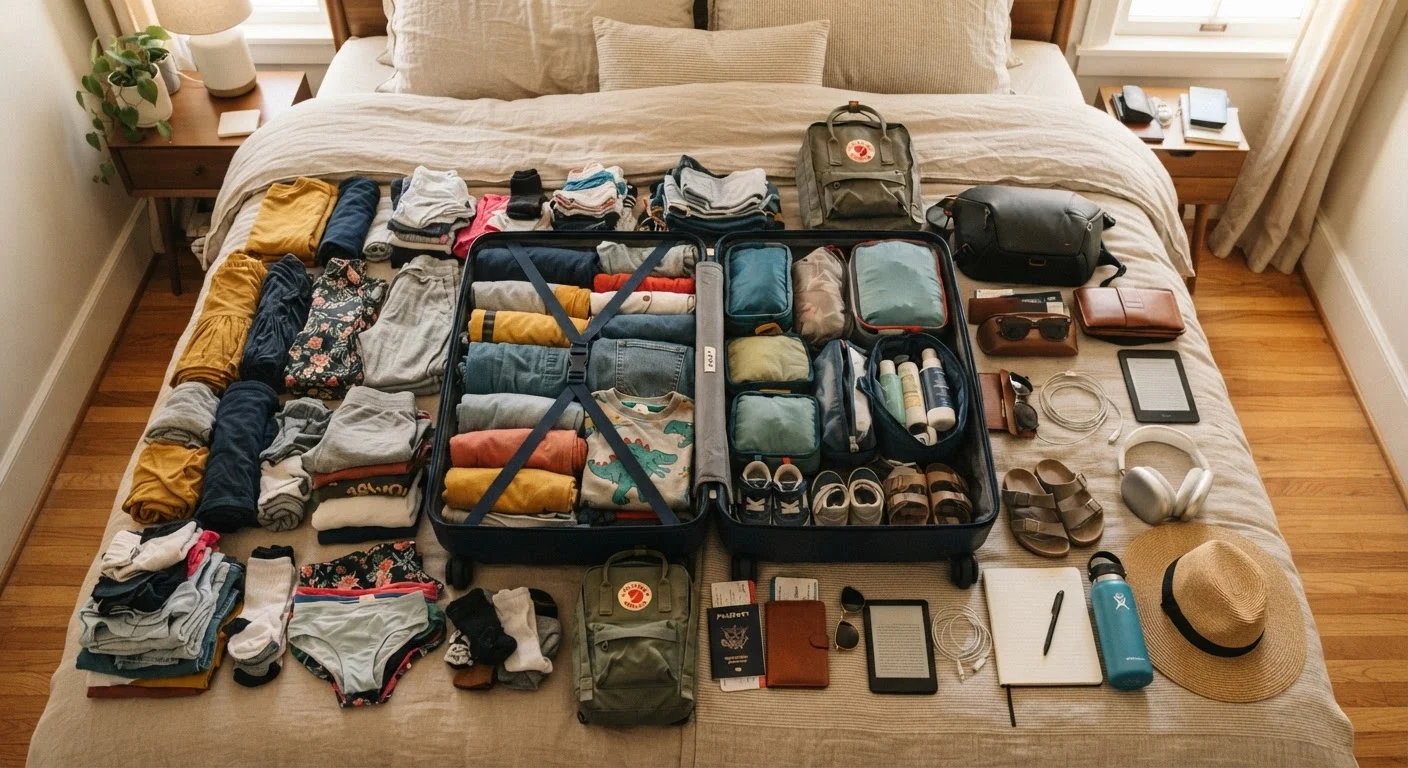
Photo: nativeinfoline.com editorial
Key Takeaways
- Checked bag fees can add $60 or more per round trip, making carry-on-only travel worth the discipline.
- Most overpacked items fall into predictable categories: backup clothing, bulky entertainment, and destination-specific gear.
- Packing a shared family bag instead of individual bags reduces weight and speeds up airport security.
- Laundry access at the destination lets families pack half the clothing without discomfort.
- Renting or borrowing gear locally costs less than hauling it and paying airline overage fees.
Why families consistently overpack
Overpacking is not a discipline problem. It is a planning problem. Families pack for worst-case scenarios rather than likely ones, and the result is luggage that costs extra to check, slows everyone down at the airport, and gets dragged through hotel lobbies while someone is carrying a crying toddler.
Checked bag fees at most U.S. carriers run $35 to $40 per bag each way. A family of four checking two bags round trip can spend $140 to $160 before anyone boards the plane. That is money that could cover a full day of meals or a museum visit. The cost breakdown families rarely see coming includes these fees, and they compound fast.
The fix starts before anyone opens a suitcase. A written packing list built around the specific itinerary, not a generic checklist, eliminates most of the problem. Cross-reference the list against weather forecasts and planned activities, then cut anything that appears on the list only because it "might be useful."
What is genuinely worth bringing
A few categories of items consistently earn their space across trip types.
Versatile clothing layers beat volume every time. A lightweight fleece, a packable rain shell, and neutral-colored bottoms that pair with multiple tops cover most weather scenarios without filling a second bag. Aim for five to seven days of clothing per adult and four to five per child, regardless of trip length, if laundry is accessible at the destination.
Medications and a basic first-aid kit belong in the carry-on, not checked luggage. Prescription medications should travel with the person who takes them, never in a bag that might be delayed. A small pill organizer, a digital thermometer, children's pain reliever in the correct dose for each child's weight (confirm dosing with a pharmacist before travel), and adhesive bandages handle the majority of minor situations.
For road trips specifically, a cooler with snacks and drinks cuts roadside spending significantly. The full road trip budget guide covers food strategy in more depth, including how to plan stops around grocery stores rather than highway rest stops.
Documents, insurance cards, and downloaded offline maps belong in a waterproof pouch in the personal item bag. Paper backups of hotel confirmations and any attraction tickets are worth printing. The pre-departure checklist covers the full document set families should prepare before leaving home.
$140+
Average round-trip checked bag cost for a family of four
Based on standard checked bag fees of $35 to $40 per bag each way at major U.S. carriers, with two bags checked per trip.
50%
Clothing families typically leave unworn on vacation
Travel behavior research consistently finds that roughly half the clothing packed on family trips is never worn during the trip.
Smarter habits that reduce what you haul
Booking accommodations with in-unit laundry or a nearby laundromat changes the math on clothing entirely. Washing clothes once during a seven-day trip means packing for four days instead of seven. Many vacation rentals include washers and dryers as standard, and family-focused hotel chains often have coin laundry on-site.
Renting destination-specific gear locally is almost always cheaper than checking it. Car seats, strollers, beach chairs, snorkel sets, and ski helmets are available for rent at most family destinations. Airlines charge $30 to $150 to check a car seat on some routes, and rental car companies and vacation rental agencies rent certified seats for $10 to $15 per day. Verify safety certification before renting any child restraint.
A shared family personal item, a single large tote or packable backpack, carries the items everyone will need during transit: snacks, tablets, chargers, headphones, activity books, and any medication. Distributing this into five separate small bags adds confusion and slows security screening.
Families who travel to lower-profile U.S. destinations often find that local outfitters and general stores stock gear at competitive prices, which makes packing light even easier. Buying a forgotten item at the destination is rarely as expensive as the checked bag fee spent hauling the item you almost left behind.
Spending discipline during packing connects directly to the broader patterns of household overspending that drain travel savings before the trip even starts.
The content provided on our blog site traverses numerous categories, offering readers valuable and practical information. Readers can use the editorial team’s research and data to gain more insights into their topics of interest. However, they are requested not to treat the articles as conclusive. The website team cannot be held responsible for differences in data or inaccuracies found across other platforms. Please also note that the site might also miss out on various schemes and offers available that the readers may find more beneficial than the ones we cover.