
Peel-and-Stick vs. Traditional Wallpaper: Which Actually Holds Up?

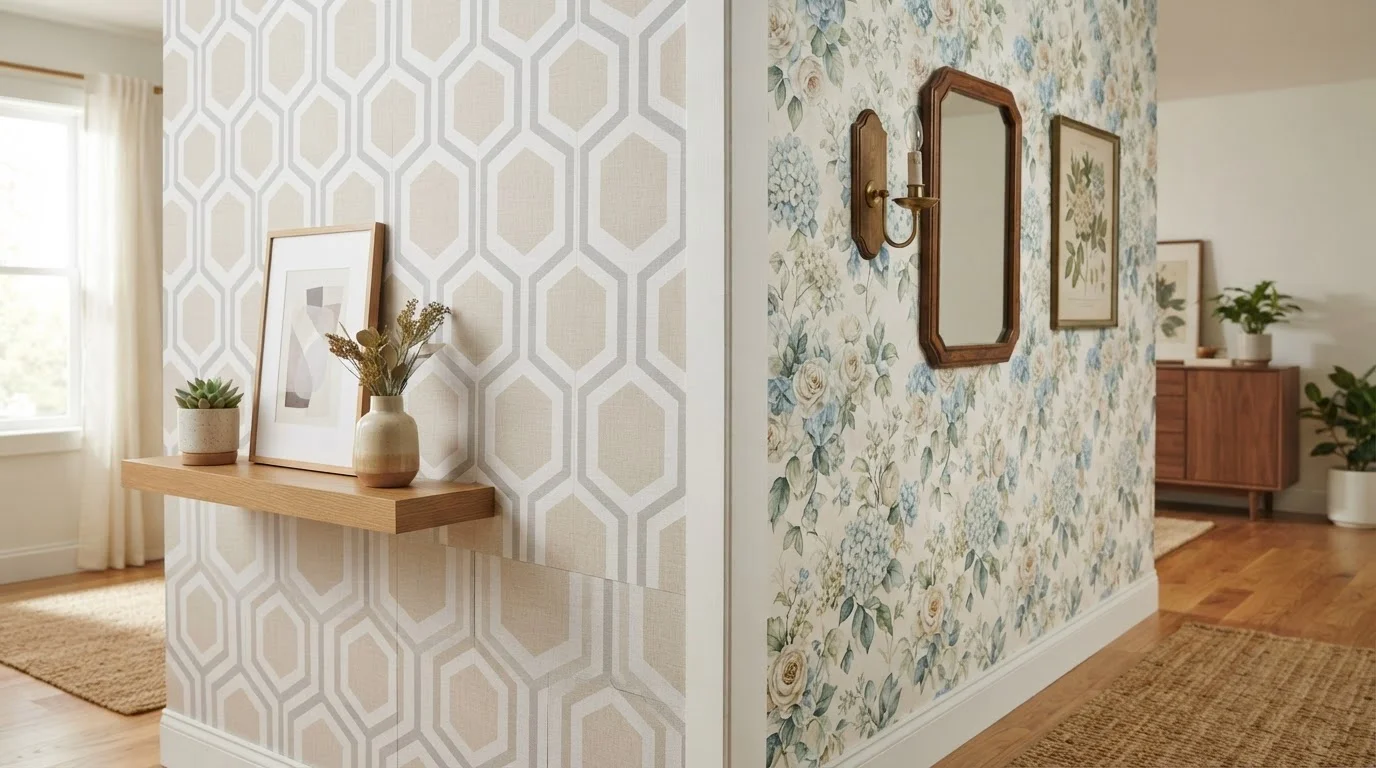
Photo: nativeinfoline.com editorial
Key Takeaways
- Traditional wallpaper typically lasts 10 to 15 years or more; peel-and-stick is generally rated for 3 to 5 years.
- Peel-and-stick requires smooth, clean, primed walls to adhere properly and avoid peeling edges.
- Traditional wallpaper demands more surface prep, adhesive work, and drying time, but bonds more reliably to imperfect walls.
- Removal is much simpler with peel-and-stick, making it ideal for rental properties.
- Cost per roll is often lower for peel-and-stick, but pattern repeats can mean buying more material than expected.
How each type works
Peel-and-stick wallpaper uses a pressure-sensitive adhesive already applied to the backing. You cut the panel to length, peel the liner, and press it flat against the wall. No paste, no soaking, no wait time before the room is usable again.
Traditional wallpaper comes in two main forms: paste-the-wall and paste-the-paper. Paste-the-wall products let you apply adhesive directly to the surface before hanging each strip. Paste-the-paper products require soaking or activating the adhesive on the paper itself before hanging. Both methods create a chemical bond with the wall surface once dry, which is why traditional wallpaper tends to stay put for years without edge lift.
The adhesive difference matters most at the seams. Peel-and-stick seams can begin to separate in rooms with temperature swings or humidity, while traditional paste forms a more uniform bond across the full panel face.
| Criterion | Peel-and-stick wallpaper | Traditional wallpaper |
|---|---|---|
| Typical lifespan | 3 to 5 years | 10 to 15+ years |
| Installation difficulty | Low; no tools required | Moderate; paste and seam tools needed |
| Surface prep required | Very smooth, clean, primed wall | Primed wall; tolerates minor texture |
| Humidity resistance | Poor to moderate | Good with vinyl coating |
| Removal ease | Simple; peels off cleanly | Labor-intensive; may need steaming |
| Typical cost per sq ft | $1 to $3 (material only) | $1 to $6+ (material only) |
| Renter-friendly | Yes | Generally no |
| Seam durability over time | Can gap or lift | Locks once paste dries |
Surface prep: where most DIY installs fail
Both types punish skipped prep, but in different ways. Peel-and-stick wallpaper is unforgiving about surface texture. Any bump, crack, or dust particle shows through the panel or breaks the adhesive seal at that spot. Walls must be clean, dry, and as smooth as possible. Fresh paint needs at least 30 days to fully cure before you apply pressure-sensitive adhesive, otherwise the wallpaper can pull the paint off when removed.
Traditional wallpaper tolerates minor surface imperfections better because the adhesive fills small gaps as it sets. However, it still requires a primed wall. Unprimed drywall will absorb paste unevenly and make future removal extremely difficult since the paper can bond directly to the paper face of the drywall itself.
If your walls have popcorn texture, heavily layered old paint, or substantial patching, traditional wallpaper with a thick vinyl product is more forgiving than peel-and-stick. For wall prep mistakes to avoid before any wall covering project, the same rules about sanding, priming, and cleaning apply whether you are painting or papering.
Longevity and finish quality
Traditional wallpaper, when hung on a properly prepared surface, commonly lasts 10 to 15 years. Some vinyl wallpapers in low-traffic rooms have held up for 20 years without significant fading or edge failure. The paste bond hardens over time rather than degrading.
Peel-and-stick products are generally rated by manufacturers for 3 to 5 years under normal residential conditions. In rooms with direct sunlight, the adhesive can dry out faster and edges begin to lift. In humid rooms like bathrooms, the opposite problem occurs: moisture softens the adhesive and causes panels to slide or bubble.
Finish quality is closer between the two types than it used to be. Modern peel-and-stick products include woven fabric-backed panels that look nearly identical to traditional vinyl wallpaper at normal viewing distance. The difference shows up in seam alignment over time: peel-and-stick seams may gap slightly as panels shift, while traditional wallpaper seams are effectively locked once the paste dries.
For rooms where the visual result is a priority, budget materials that can still deliver a high-end look includes peel-and-stick options that photograph well and hold up reasonably in low-humidity spaces.
10-15 years
Average lifespan of traditional wallpaper
Industry installation guides from wallpaper trade associations cite 10 to 15 years as a standard residential lifespan for properly hung vinyl wallpaper.
3-5 years
Typical rated life for peel-and-stick products
Most peel-and-stick wallpaper manufacturers list 3 to 5 years as the expected adhesive performance window under normal indoor conditions.
30 days
Paint cure time before applying peel-and-stick
Applying pressure-sensitive adhesive to paint that has not fully cured can cause the paint layer to peel away during removal.
Cost and removal
Peel-and-stick wallpaper typically runs $1 to $3 per square foot for mid-range options, with pattern repeats sometimes requiring 20 to 30 percent more material than the raw square footage of your wall. Traditional wallpaper ranges widely, from roughly $1 per square foot for basic vinyl to $6 or more for specialty materials, and professional installation adds $1 to $3 per square foot on top.
Removal tells a different story. Peeling off peel-and-stick panels from a properly primed wall takes minutes and leaves no residue on most surfaces. Traditional wallpaper removal can take hours or days depending on the adhesive used, the number of layers, and whether the walls were sized or primed before hanging. Steaming or scoring and soaking is often necessary.
For renters, the removal math is simple: peel-and-stick is the practical choice. For homeowners who want a wall treatment that does not need replacing every few years, the higher upfront cost and effort of traditional wallpaper often makes more financial sense over the life of the home.
The content provided on our blog site traverses numerous categories, offering readers valuable and practical information. Readers can use the editorial team’s research and data to gain more insights into their topics of interest. However, they are requested not to treat the articles as conclusive. The website team cannot be held responsible for differences in data or inaccuracies found across other platforms. Please also note that the site might also miss out on various schemes and offers available that the readers may find more beneficial than the ones we cover.