
Loyalty Programs Across Grocery, Pharmacy, and Retail: What You Give Up for the Perks

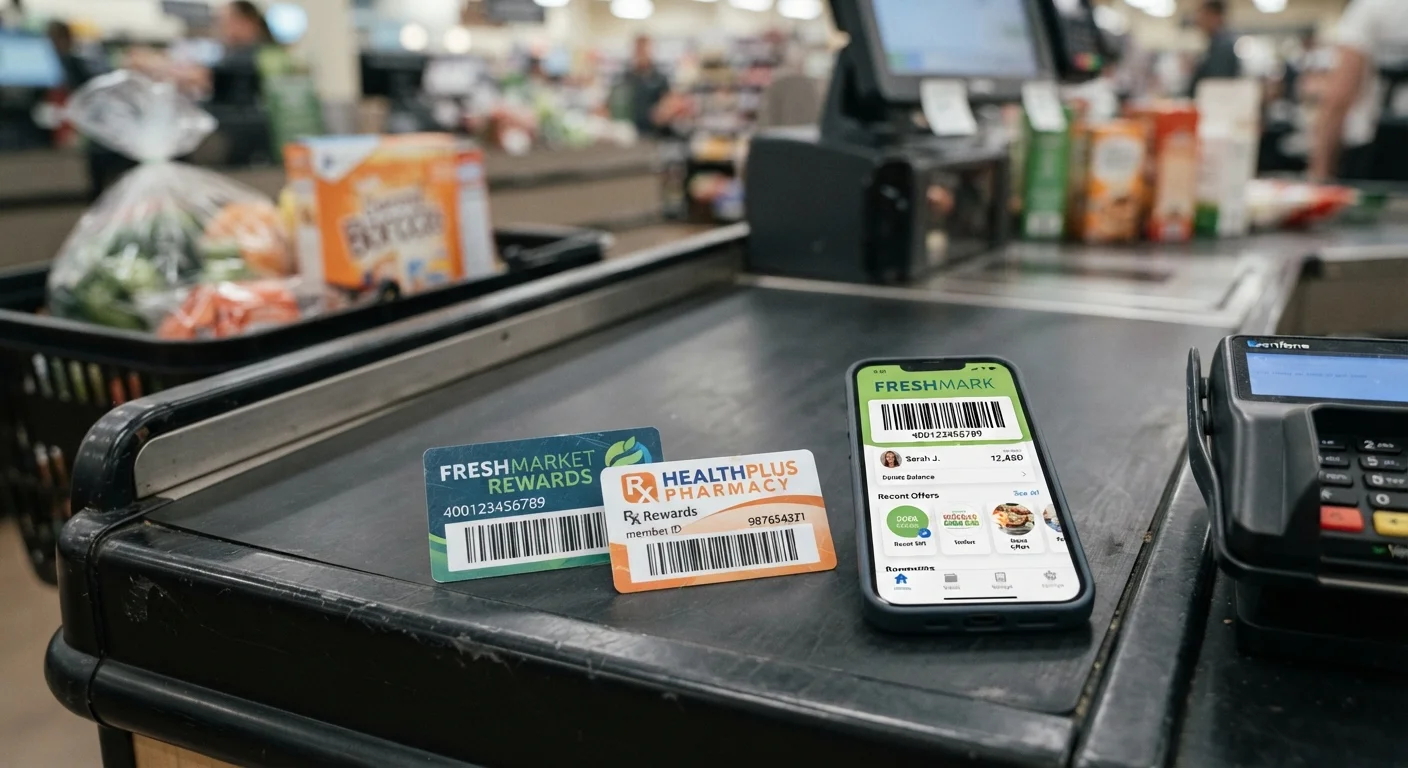
Photo: nativeinfoline.com editorial
Key Takeaways
- Loyalty programs can generate real savings on recurring purchases, but those savings are funded by your purchase data.
- Grocery and pharmacy programs tend to offer the most concrete, immediate value for families.
- Personalized pricing through loyalty apps can mean two shoppers pay different amounts for the same item.
- Signing up for multiple programs raises your exposure to data sharing and targeted marketing.
- The financial benefit is only real if you would have bought the item anyway at a comparable price.
Immediate savings on frequently purchased grocery items
Member pricing on staples such as dairy, produce, and meat can reduce a weekly grocery bill by a measurable amount for households shopping at the same store consistently.
Prescription cost reductions at pharmacy chains
Generic drug pricing tiers through pharmacy membership programs can lower per-fill costs significantly, which matters for families managing recurring medications without full prescription coverage.
Digital coupons targeted to your actual purchases
Personalized offers, while driven by data collection, do tend to surface discounts on products you already buy, which reduces the time spent hunting for relevant deals manually.
Points or cashback on spending you were going to do anyway
Retail loyalty programs that return a percentage of spend as cash or points add a passive recovery layer to purchases that would have happened regardless of the program.
No upfront cost in most cases
The majority of grocery, pharmacy, and general retail loyalty programs are free to join, so the financial risk of participation is limited to the behavioral and data tradeoffs, not a fee.
Detailed purchase behavior is tracked and monetized
Every transaction tied to your member ID feeds a profile that retailers use internally and may share with marketing partners, advertisers, or data aggregators under terms most members never read.
Personalized pricing means unequal costs for the same item
Some grocery apps now show member-specific prices that differ by shopper based on purchase history, meaning your neighbor may pay a different price for the same product on the same day.
Program design is built to increase your spending
Threshold rewards, limited-time bonus offers, and category challenges are all techniques designed to shift your purchasing behavior in directions that benefit the retailer's revenue, not your budget.
Pharmacy programs involve health-adjacent data
Over-the-counter purchase patterns can reveal inferred health information. Privacy policies at most pharmacy retailers permit broad use of this data within the limits of applicable law.
Rewards often expire or carry redemption restrictions
Points that expire, cashback minimums before payout, and category restrictions on redemption all reduce the real value of rewards compared to the advertised rate.
Multiple program memberships multiply your data exposure
Joining every program you encounter spreads your purchase history across many corporate databases, each with its own privacy terms and data retention practices.
How loyalty programs actually work
Grocery chains, pharmacy retailers, and big-box stores all run loyalty programs, but the mechanics vary. Most programs assign a member ID that ties every transaction to your profile. That data feeds pricing algorithms, marketing systems, and in some cases third-party data brokers.
At the grocery level, programs typically unlock member-only shelf prices or digital coupons. Pharmacy programs often layer prescription savings on top of front-of-store discounts. General retail loyalty programs usually run on a points or cashback model, where spending accumulates toward a future reward. See how these dynamics connect to broader household budget patterns in our look at where families quietly overspend every month.
One structural feature worth noting: in many grocery programs, the "member price" is the baseline price the retailer intends to charge. The non-member price is often set artificially high to make the discount feel larger than it is. That does not mean the savings are fake, but it does mean the headline percentage is not always a fair comparison.
What you actually gain
Immediate savings on frequently purchased grocery items
Member pricing on staples such as dairy, produce, and meat can reduce a weekly grocery bill by a measurable amount for households shopping at the same store consistently.
Prescription cost reductions at pharmacy chains
Generic drug pricing tiers through pharmacy membership programs can lower per-fill costs significantly, which matters for families managing recurring medications without full prescription coverage.
Digital coupons targeted to your actual purchases
Personalized offers, while driven by data collection, do tend to surface discounts on products you already buy, which reduces the time spent hunting for relevant deals manually.
Points or cashback on spending you were going to do anyway
Retail loyalty programs that return a percentage of spend as cash or points add a passive recovery layer to purchases that would have happened regardless of the program.
No upfront cost in most cases
The majority of grocery, pharmacy, and general retail loyalty programs are free to join, so the financial risk of participation is limited to the behavioral and data tradeoffs, not a fee.
Prescription savings through pharmacy loyalty programs can be significant. Many major pharmacy chains offer generic drug pricing tiers for members that can reduce out-of-pocket costs meaningfully, particularly for families without comprehensive drug coverage. Those are real dollars on predictable, recurring purchases.
Grocery loyalty programs that stack digital coupons with member pricing give organized shoppers a compounding advantage. When combined with store-brand swaps, the savings add up faster. Our article on store brands vs. name brands shows where that combination tends to work best. For readers who also want to layer cashback on top, stacking discounts explains when that approach holds up and when it fails.
What you give up
Detailed purchase behavior is tracked and monetized
Every transaction tied to your member ID feeds a profile that retailers use internally and may share with marketing partners, advertisers, or data aggregators under terms most members never read.
Personalized pricing means unequal costs for the same item
Some grocery apps now show member-specific prices that differ by shopper based on purchase history, meaning your neighbor may pay a different price for the same product on the same day.
Program design is built to increase your spending
Threshold rewards, limited-time bonus offers, and category challenges are all techniques designed to shift your purchasing behavior in directions that benefit the retailer's revenue, not your budget.
Pharmacy programs involve health-adjacent data
Over-the-counter purchase patterns can reveal inferred health information. Privacy policies at most pharmacy retailers permit broad use of this data within the limits of applicable law.
Rewards often expire or carry redemption restrictions
Points that expire, cashback minimums before payout, and category restrictions on redemption all reduce the real value of rewards compared to the advertised rate.
Multiple program memberships multiply your data exposure
Joining every program you encounter spreads your purchase history across many corporate databases, each with its own privacy terms and data retention practices.
The data exchange is the part most programs downplay. When you use a loyalty card consistently, the retailer builds a detailed picture of your household: what you buy, how often, in what quantities, and how your behavior shifts in response to promotions. That profile has value, and sharing it is the implicit price of membership.
Behavioral nudges are also baked into program design. Personalized offers target your known preferences to encourage you to spend more in specific categories or reach a spending threshold for a reward. The program is not neutral; it is built to change your behavior in ways that benefit the retailer. Families concerned about these dynamics may also want to read about grocery budget strategies that hold up in real life to stay grounded in needs-based purchasing.
What 'member price' actually means
Pharmacy programs: a separate consideration
Pharmacy loyalty programs warrant their own attention because they involve health-related purchase data. When a program tracks which over-the-counter products you buy, that data can reflect inferred health conditions. Most retailers' privacy policies permit sharing aggregated or de-identified data with marketing partners, though definitions of "de-identified" vary.
This does not mean avoiding pharmacy programs is the right call for everyone. For families managing ongoing prescription costs, the savings can be substantial. The point is to read the privacy terms with more care than you might for a grocery card. For broader context on health-related spending and savings, see the affordable healthy living hub.
Getting value without losing control
A few practical habits help families use loyalty programs without being used by them. Clip digital coupons only for items already on your list. Check the non-member shelf price at competing stores periodically to verify the member price is genuinely lower. Review the program's data-sharing settings if available, since some programs let you limit certain types of sharing.
For families weighing retail points programs, cashback cards vs. cashback apps covers how different reward structures compare structurally. If travel rewards programs are also on your radar, travel loyalty programs offers a grounded look at that category's math. Consolidating participation to one or two programs you use consistently produces better results than spreading thin across five programs you rarely engage with. Smart family budgeting resources can help you track whether the savings are actually showing up in your monthly totals.
The content provided on our blog site traverses numerous categories, offering readers valuable and practical information. Readers can use the editorial team’s research and data to gain more insights into their topics of interest. However, they are requested not to treat the articles as conclusive. The website team cannot be held responsible for differences in data or inaccuracies found across other platforms. Please also note that the site might also miss out on various schemes and offers available that the readers may find more beneficial than the ones we cover.