
Stacking Discounts: How Combining Offers Works and When It Fails

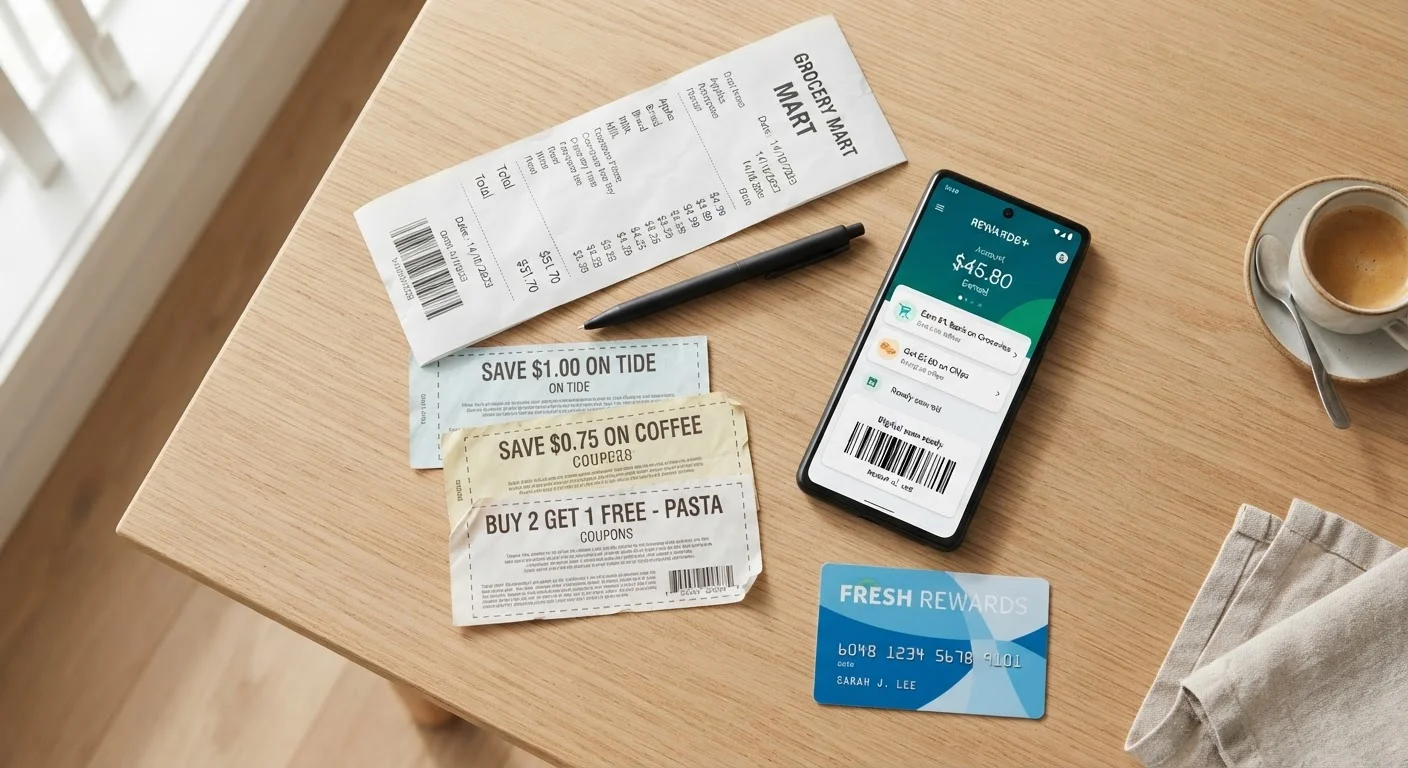
Photo: nativeinfoline.com editorial
Key Takeaways
- Manufacturer coupons and store coupons can often be used together on the same item.
- Cashback apps typically calculate their reward on the price you actually pay, not the original retail price.
- Stacking rules differ by retailer, so reading the offer terms before checkout prevents surprises.
- Sale timing and coupon expiration dates need to align for a stack to work as planned.
- Some offers explicitly exclude already-discounted items, which breaks the stack entirely.
The basic logic behind stacking
Discount stacking works because different savings types come from different sources and are calculated at different stages of a transaction. A manufacturer coupon reduces the price before the retailer processes the sale. A store coupon applies a separate reduction issued by the retailer. A cashback reward is then calculated on the final amount charged.
This sequence matters. If a $1.00 manufacturer coupon and a $0.50 store coupon both apply to an item priced at $4.00, the register processes them in order and the cashback app sees the final price of $2.50. Each discount layer operates independently, which is why stacking can produce savings that feel larger than any single offer would deliver.
The catch is that this only works when every layer in the stack is actually permitted to combine. Most stacking failures trace back to one offer in the chain that explicitly blocks other discounts, which voids the whole sequence. For a broader look at how sales timing factors in, see how retail sales cycles work.
Common combinations that tend to work
Several stacking patterns are widely accepted across US retailers, though no combination is guaranteed without checking the specific offer terms.
- Manufacturer coupon plus store coupon on the same item. This is the most established combination because the two coupons come from different issuers.
- Store sale price plus a valid manufacturer coupon. The coupon applies on top of the sale price, not the original retail price.
- Any coupon plus a credit card rewards program. Card rewards are earned on the transaction amount and are not coupon-controlled.
- Coupon or sale price plus a cashback app offer. The cashback app receives the receipt and pays its reward on the purchase, as long as the item and price meet the offer's conditions.
Loyalty program points are another layer some shoppers add. Points accumulate on the paid amount, so they stack passively without requiring extra steps at checkout. What loyalty programs trade for their perks is worth understanding before treating points as free money.
Read the offer terms in the right order
When stacking fails and why
Stacking breaks down in predictable ways. The most common failure is an offer that includes exclusion language such as 'cannot be combined with any other offer' or 'valid only on full-price items.' Clearance merchandise routinely carries these restrictions.
Digital coupons clipped through a retailer's app sometimes conflict with paper coupons for the same item. Some systems flag duplicate discounts on a single product and drop the lower-value one automatically. Shoppers who do not notice this at the register lose one layer of savings without knowing it.
Cashback app offers can also fail if the post-coupon price is too low. Some offers set a minimum purchase price, and a heavily couponed item may no longer qualify. Others require the item to scan at a specific price point to match the app's database record.
Promo codes at online retailers are a frequent stacking problem. Many e-commerce checkout fields accept only one code, and the system simply ignores any second code entered. A storewide percentage-off code typically cannot combine with a category-specific sale code unless the retailer explicitly permits it.
If coupon use has ever left you with a higher bill than expected, spending patterns that erase coupon savings covers those mechanics in detail.
How to verify before you commit
The most reliable way to confirm a stack will work is to read the terms of each offer independently, then cross-check them against the retailer's published coupon policy. Most major US grocery chains and pharmacy retailers post their coupon policies online and update them when rules change.
For digital coupons, clipping an offer to your account does not guarantee it applies to every transaction. The app's terms often specify quantity limits, excluded sizes, or price thresholds. Running a small test purchase before a larger planned shop can surface problems without significant cost.
At the register, watch the screen as each item scans. A coupon that did not apply will show the full price on the line, and catching it there gives you the chance to resolve it before paying. Keeping paper copies or screenshots of offer terms is useful if a cashier or customer service representative needs to verify what you expected.
For families building a grocery savings system, grocery budget strategies that hold up in real life pairs well with a stacking approach. And if you are new to couponing overall, how modern couponing works covers the tools and habits that make the process manageable.
~60%
US adults who use digital coupons
The Coupon Bureau has reported that digital coupon adoption among US shoppers has grown substantially, with a majority now using at least one digital offer format regularly.
1 in 3
Shoppers who encounter a coupon rejection at checkout
Consumer surveys by RetailMeNot have found that a significant share of coupon users report having a valid coupon rejected or fail to apply correctly during a transaction.
Frequently Asked Questions
The content provided on our blog site traverses numerous categories, offering readers valuable and practical information. Readers can use the editorial team’s research and data to gain more insights into their topics of interest. However, they are requested not to treat the articles as conclusive. The website team cannot be held responsible for differences in data or inaccuracies found across other platforms. Please also note that the site might also miss out on various schemes and offers available that the readers may find more beneficial than the ones we cover.