
Propagating Houseplants: Turning One Plant Into Many for Free

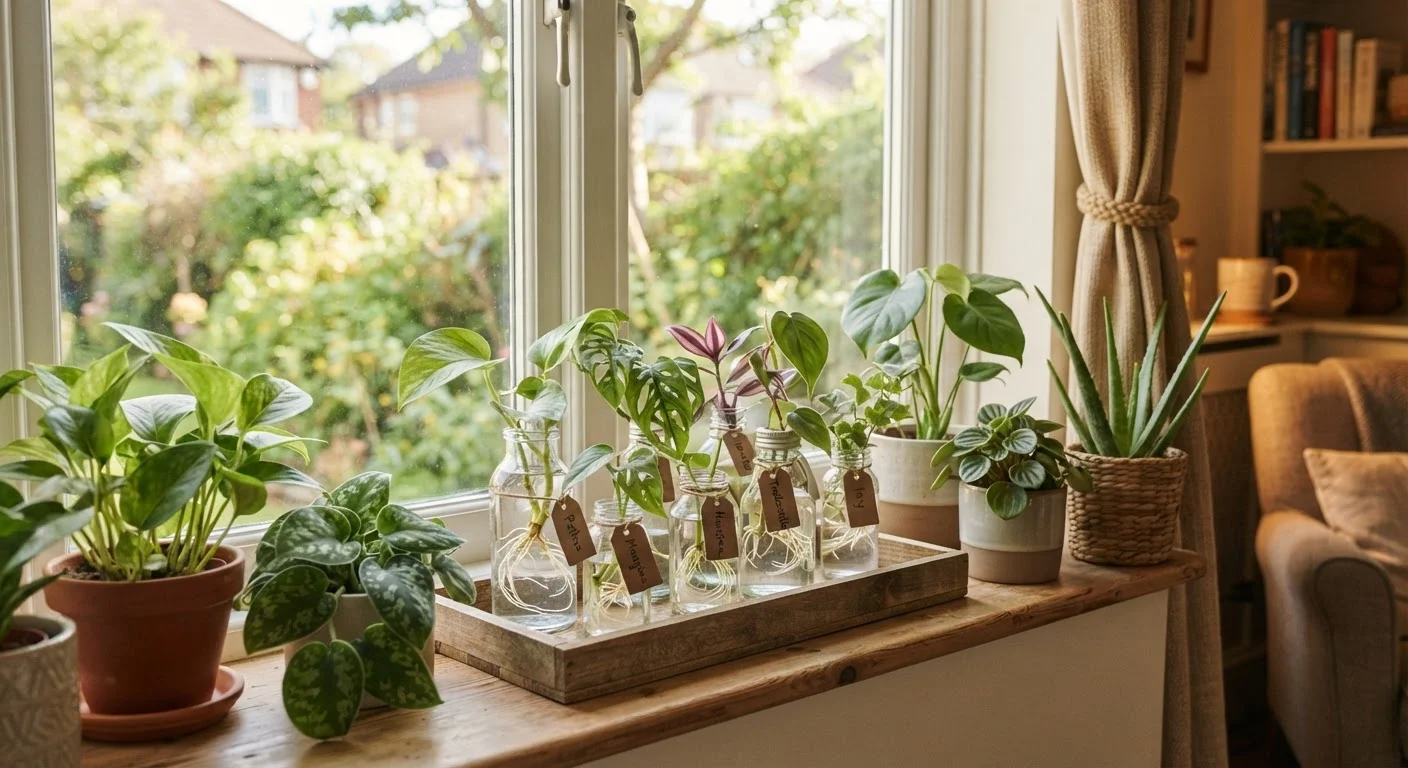
Photo: nativeinfoline.com editorial
Key Takeaways
- Stem cuttings, leaf propagation, and division can multiply most common houseplants at zero cost.
- Water propagation works well for beginners because root development is visible as it happens.
- Matching the method to the plant type determines whether cuttings root successfully.
- New plants need indirect light and consistent moisture while they establish roots.
- Propagation is one of the fastest ways to fill a home with plants without spending money.
Why propagation saves real money
A single mature pothos or snake plant purchased at a garden center can cost $15 to $40 depending on size. Propagating from a plant you already own costs nothing beyond a pot, some soil, and a few minutes of time. Over a single growing season, one healthy parent plant can produce five to twenty new plants, depending on the species and method used.
Propagation also gives you material to share. Divisions and rooted cuttings make practical gifts, and trading cuttings with neighbors or online plant communities is a common way to expand a collection without paying retail prices. If you are already building out a garden on a budget, the same frugal mindset applies indoors. See our guide to starting a vegetable garden for under $50 for how the same principles extend to food growing.
Label your cuttings from the start
Choosing the right propagation method
Three methods cover the vast majority of popular houseplants: stem cuttings, leaf cuttings, and division. Each suits different plant structures.
Stem cuttings work for plants with distinct stems, including pothos, philodendron, tradescantia, coleus, and most herbs grown indoors. You remove a section of stem with at least one node (the bump where a leaf attaches) and place it in water or moist soil until roots form.
Leaf cuttings are used for succulents and plants like snake plants and begonias. A single leaf, or a leaf with a short petiole (the stalk connecting leaf to stem), is laid on or partially inserted into moist soil. New growth emerges from the base of the leaf over several weeks.
Division applies to clumping plants: peace lilies, spider plants, ZZ plants, cast iron plants, and Boston ferns. The root ball is separated into two or more sections, each with its own roots and foliage, then repotted individually.
Step-by-step instructions
Follow these steps for each method. The tools and materials are minimal, and most are already in a typical household.
What you will need
Select and prepare your cutting or division
For stem cuttings, choose a healthy stem with at least two nodes and two to four leaves. Cut just below a node at a 45-degree angle. Remove all leaves from the bottom node so no foliage sits below the waterline or in the soil.
For leaf cuttings from succulents, gently twist the leaf away from the stem with a clean downward pull. The entire base of the leaf must stay intact for the cutting to produce new growth.
For division, remove the parent plant from its pot and shake loose excess soil. Locate natural separation points in the root ball and pull sections apart by hand, or use a clean knife if roots are too dense to separate manually.
Root the cutting using water or soil
For water propagation, place the prepared stem cutting in a clean glass jar filled with room-temperature water. Position the jar on a bright windowsill away from direct sun. Change the water every four to five days to prevent bacterial buildup. Roots typically appear within one to three weeks for fast-rooting plants like pothos and tradescantia.
For soil propagation, fill a small pot with moist potting mix. If using rooting hormone, dip the cut end lightly before inserting it. Push the stem one to two inches into the soil and firm the mix around it. Cover loosely with a clear plastic bag to hold humidity, removing it for an hour daily to allow air circulation.
For succulent leaves, lay them flat on dry propagation mix and place in bright indirect light. Do not water until tiny rosettes appear at the base, which can take three to eight weeks.
Pot up rooted cuttings and establish new plants
Water-rooted cuttings are ready to pot when roots are one to two inches long. Transition them to soil gradually: plant in moist potting mix and keep it consistently damp for the first two weeks, which mimics the water environment they rooted in.
Soil-rooted cuttings are ready when a gentle tug meets resistance, which indicates roots have anchored. At that point, treat them as established plants and begin a normal watering routine.
Each division from a larger plant can go straight into its own pot with fresh soil. Water thoroughly and place in a location with the same light conditions as the parent plant.
Common problems and how to fix them
Cuttings rot in water when the water is not changed frequently enough or when too many leaves are left on the submerged portion. Strip all leaves below the waterline before placing a cutting in a jar, and change the water every four to five days.
Leaf cuttings from succulents fail when the cut end is not allowed to callous (dry out) before it touches soil. Leave freshly removed leaves on a dry surface for 24 to 48 hours before laying them on a propagation mix.
Divisions wilt after repotting because root damage reduces water uptake temporarily. Water thoroughly after dividing, place the new plant in a spot with lower light for one to two weeks, and avoid fertilizing until new growth appears.
Cuttings that sit in soil for weeks without rooting are often either too cold or planted in a mix that stays too wet. A perlite-heavy mix and a warm spot above 65 degrees Fahrenheit improve success rates significantly.
Some common houseplants are toxic to pets and children
The content provided on our blog site traverses numerous categories, offering readers valuable and practical information. Readers can use the editorial team’s research and data to gain more insights into their topics of interest. However, they are requested not to treat the articles as conclusive. The website team cannot be held responsible for differences in data or inaccuracies found across other platforms. Please also note that the site might also miss out on various schemes and offers available that the readers may find more beneficial than the ones we cover.