
Physical Activity That Costs Nothing: Evidence-Based Options for Busy Families

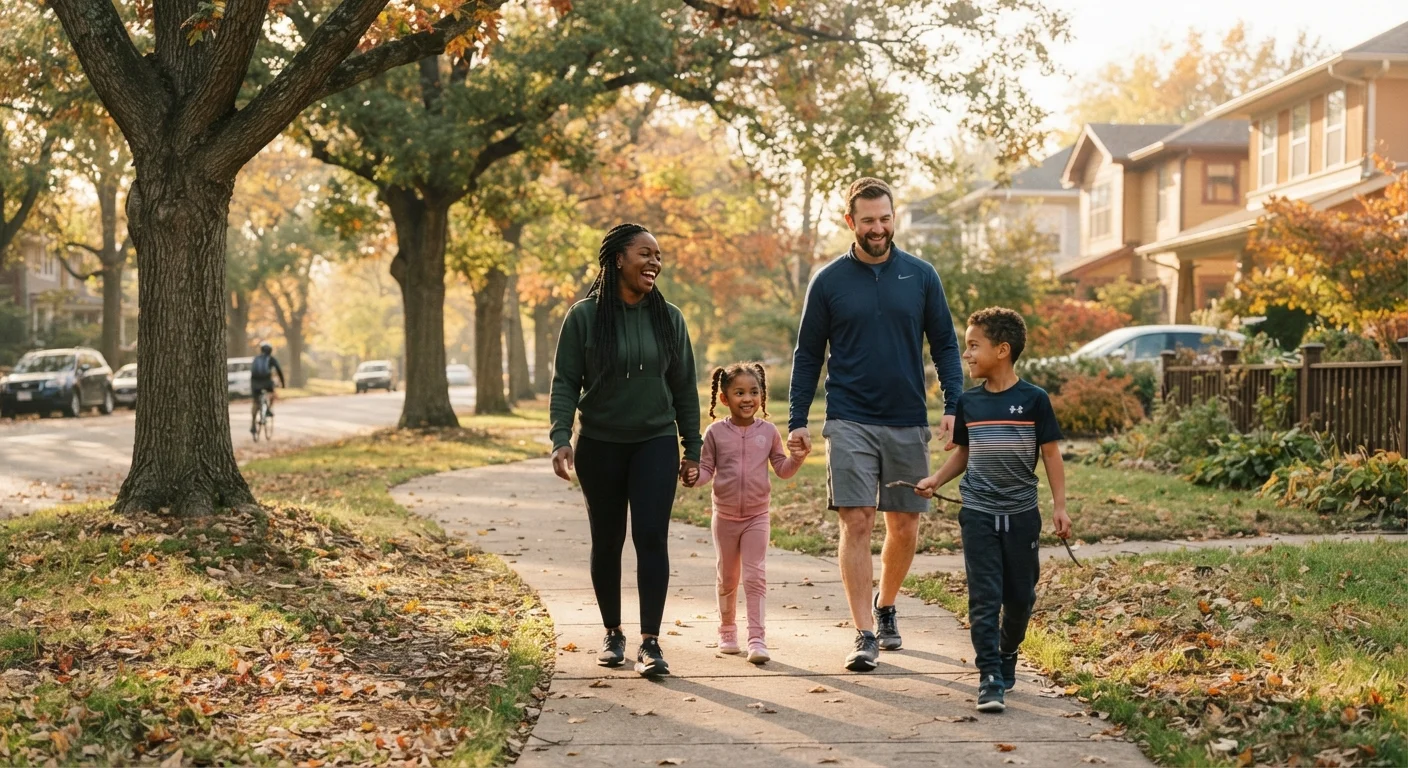
Photo: nativeinfoline.com editorial
Key Takeaways
- Walking, bodyweight exercise, and active play meet physical activity guidelines without any equipment or gym fees.
- The CDC recommends children get 60 minutes of physical activity daily; adults need 150 minutes of moderate activity per week.
- Short activity sessions spread across the day count toward weekly totals, making fitness realistic for busy schedules.
- Pairing activity with nutrition habits amplifies health outcomes without increasing household costs.
- Public parks, schoolyards, and sidewalks are free infrastructure that families already have access to.
What the evidence says about free physical activity
A gym membership is not a prerequisite for meeting physical activity guidelines. The U.S. Department of Health and Human Services Physical Activity Guidelines for Americans state that adults benefit from at least 150 minutes of moderate-intensity aerobic activity per week, and that children aged 6 to 17 need 60 minutes of physical activity each day. None of that requires spending money.
Walking is one of the most studied forms of exercise in public health research. It is low-impact, accessible to most fitness levels, and adaptable to almost any schedule. Brisk walking at roughly 3 to 4 miles per hour qualifies as moderate-intensity activity under federal guidelines. A 30-minute walk after dinner, done five days a week, satisfies the adult recommendation entirely.
Bodyweight exercise, including push-ups, squats, lunges, and planks, builds muscular strength without equipment. The Physical Activity Guidelines classify muscle-strengthening activities as a separate but equally important category: adults should include them at least two days per week. For families trying to stretch every dollar, as outlined in practical household budgeting strategies, replacing paid fitness classes with bodyweight routines at home is one of the clearest cost eliminations available.
How to build activity into an already busy day
Research on exercise adherence consistently shows that schedule fit matters more than workout intensity for long-term consistency. Families with school-age children and full-time work schedules often struggle to find a single 30- or 60-minute block. The good news: the Physical Activity Guidelines confirm that episodes as short as 10 minutes count when accumulated across the day.
Schedule walks as fixed family appointments, not optional additions
Use bodyweight circuits during natural gaps in the household routine
Assign active chores to children as part of their daily movement
Turn screen time into active time at least once per day
Use public parks and trails as the default weekend activity venue
Active commuting is another underused option. Walking or cycling to school, to a bus stop, or to a nearby errand destination adds minutes without requiring separate workout time. The CDC notes that active transportation improves cardiovascular fitness and reduces sedentary time, both of which matter for children and adults.
Pairing physical activity with nutrition habits compounds the benefit without extra cost. Families focused on affordable, evidence-backed eating habits and consistent movement cover two of the biggest modifiable health factors simultaneously.
Free resources families already have
Public parks, paved trails, schoolyard tracks, and neighborhood sidewalks are free physical activity infrastructure. The National Recreation and Park Association reports that more than 90 percent of Americans live within 10 minutes of a park. Many parks include open grass fields for informal sports, paved paths for walking or jogging, and playground equipment that supports active play for children.
Playground use by children qualifies as vigorous-intensity activity, the highest category in federal guidelines, when they are running, climbing, and jumping. For younger children especially, this kind of unstructured active play contributes substantially to the daily 60-minute target.
Online video platforms offer free follow-along bodyweight workouts, yoga sessions, and cardio routines that require no equipment and minimal space. Library systems in many cities also provide free access to fitness video collections and app subscriptions. These options carry no recurring cost, which matters for households tracking spending carefully.
Families who also travel occasionally can apply the same principle: walking a city neighborhood or hiking a state park trail costs nothing beyond getting there. Lesser-known U.S. destinations often feature trails, beaches, and parks that make active family time a natural part of the trip.
This article is for general informational purposes only and is not medical advice. Consult a qualified healthcare professional before starting a new exercise program, particularly if you have existing health conditions or concerns about physical activity for your children.
The content provided on our blog site traverses numerous categories, offering readers valuable and practical information. Readers can use the editorial team’s research and data to gain more insights into their topics of interest. However, they are requested not to treat the articles as conclusive. The website team cannot be held responsible for differences in data or inaccuracies found across other platforms. Please also note that the site might also miss out on various schemes and offers available that the readers may find more beneficial than the ones we cover.