
Sinking Funds Explained: How Families Plan for Predictable Big Expenses

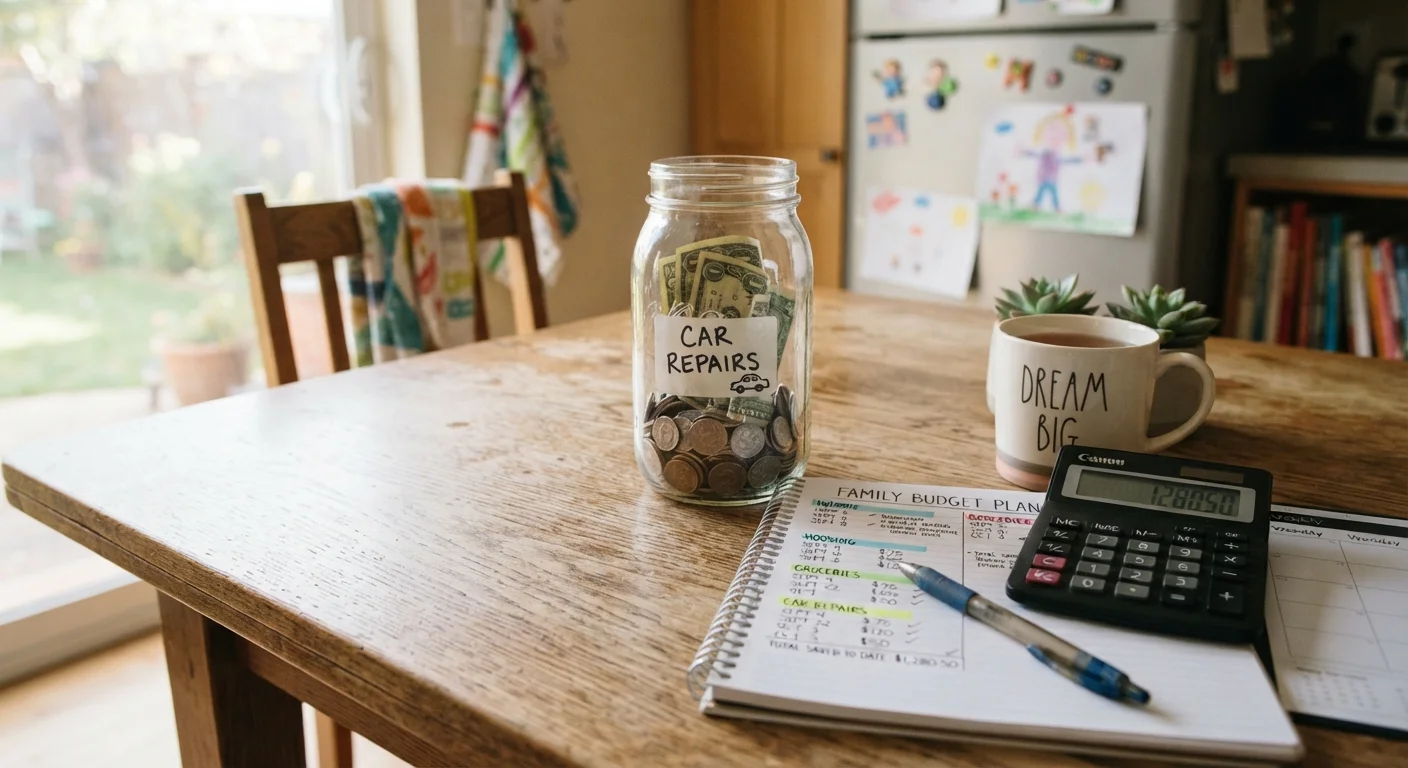
Photo: nativeinfoline.com editorial
Key Takeaways
- A sinking fund saves for predictable future costs in regular, small increments.
- Sinking funds differ from emergency funds, which are for unplanned events.
- Common family sinking funds cover car repairs, school expenses, holidays, and travel.
- Dividing the total cost by the number of months until the expense sets your monthly target.
- Keeping sinking funds in separate, labeled accounts reduces the temptation to spend them.
- Families can start with one or two funds and add more as the habit takes hold.
What a sinking fund actually does
Most families treat predictable big expenses the same way they treat surprises: they absorb the hit when it arrives and figure out the budget later. A sinking fund changes that pattern by spreading the cost over the months before it is due.
The math is straightforward. You estimate the upcoming expense, count the months until you need the money, and divide. That quotient becomes a regular line in your monthly budget, no different from a utility bill. When the expense arrives, the money is already sitting in the account.
This approach works because many costs that feel sudden are actually predictable. Car registrations renew on a fixed schedule. School starts every fall. The winter holidays come every December. None of these are surprises, yet families frequently treat them as financial emergencies because they did not plan for them in advance. A sinking fund converts a lump-sum stress point into a series of small, manageable transfers.
For families already using a structured budgeting method, sinking funds fit naturally alongside it. Zero-based budgeting works particularly well with sinking funds because each fund gets assigned its own dollar allocation before the month starts.
How sinking funds differ from emergency savings
Sinking funds and emergency funds are both savings tools, but they are not interchangeable. An emergency fund is for costs you cannot predict: a sudden medical bill, a job loss, or a furnace that stops working in January. A sinking fund is for costs you can predict but that do not fall evenly across every month.
Mixing the two is a common mistake. When a family uses emergency savings to pay for the holidays or new school backpacks, the emergency fund shrinks. If a genuine emergency follows shortly after, the cushion is gone. Keeping the accounts separate protects both purposes.
Building an emergency fund on a tight budget is its own challenge, and that fund should stay untouched for true emergencies. Sinking funds absorb the predictable costs so the emergency fund is less likely to be raided.
Keep sinking funds out of your main account
Common sinking funds for American families
The right set of sinking funds depends on each household's recurring expenses, but several categories come up often:
- Vehicle maintenance and registration: Oil changes, tires, and annual fees are predictable in both timing and rough cost. A general car fund of $50 to $100 per month covers most routine needs for a single vehicle.
- Back-to-school expenses: Supplies, clothing, activity fees, and sports gear add up quickly in August and September. Saving a fixed amount each month from January onward softens the impact.
- Holiday and gift spending: December spending is one of the most predictable budget pressures of the year. Families who estimate their total holiday budget in January and divide by eleven arrive at December fully funded.
- Annual insurance premiums: Some policies offer a discount for paying the full year upfront. A sinking fund makes that option available without straining a single month's cash flow.
- Family travel: Even modest trips require airfare, lodging, or fuel. Planning a dedicated travel fund well in advance keeps the cost from landing on a credit card. The Value Family Travel hub has practical ideas for stretching that fund further.
Families who want to understand how these fit into a broader spending picture can consult the budget vocabulary guide for definitions of related terms.
Nearly 40%
Americans who could not cover a $400 emergency expense without borrowing
According to the Federal Reserve's Report on the Economic Well-Being of U.S. Households, a significant share of families lack immediate liquid funds for moderate unexpected costs.
$1,000+
Average American holiday spending per household
The National Retail Federation has tracked annual holiday spending for decades; per-household totals regularly exceed $1,000 when gifts, food, and decorations are included.
$1,200
Typical annual vehicle maintenance cost per car
AAA estimates that routine maintenance costs for an average vehicle run roughly $100 per month when spread across the year, making it one of the most common sinking fund categories.
Setting up and maintaining sinking funds
Start by listing every predictable expense your household faces in the next twelve months. Include the estimated cost and the month it will be due. Sort the list by how soon each expense arrives so you can prioritize which funds to open first.
For each item, divide the estimated total by the number of months between now and the due date. That is your monthly contribution. If the number feels too high for your current budget, either lower the expense estimate or extend the timeline if possible. A smaller contribution started early still beats no contribution at all.
Open a dedicated account, or use sub-accounts if your bank supports them, for each fund. Label each account clearly. The separation is the point: money in a labeled account is harder to spend casually than money sitting in a general checking balance. Many online banks allow multiple savings accounts with custom names, which makes this setup easier to manage.
Review your funds once a month when you review the rest of your budget. Adjust contributions if an estimate changes or if a new predictable expense appears. Over time, the process becomes routine, and fewer expenses feel like financial emergencies. Families who are starting a budget from scratch may find it useful to build one or two sinking funds into their first budget rather than waiting until the system feels perfect.
This article is for general informational purposes only and does not constitute personalized financial advice. Consult a qualified financial professional for guidance specific to your situation.
Frequently Asked Questions
The content provided on our blog site traverses numerous categories, offering readers valuable and practical information. Readers can use the editorial team’s research and data to gain more insights into their topics of interest. However, they are requested not to treat the articles as conclusive. The website team cannot be held responsible for differences in data or inaccuracies found across other platforms. Please also note that the site might also miss out on various schemes and offers available that the readers may find more beneficial than the ones we cover.